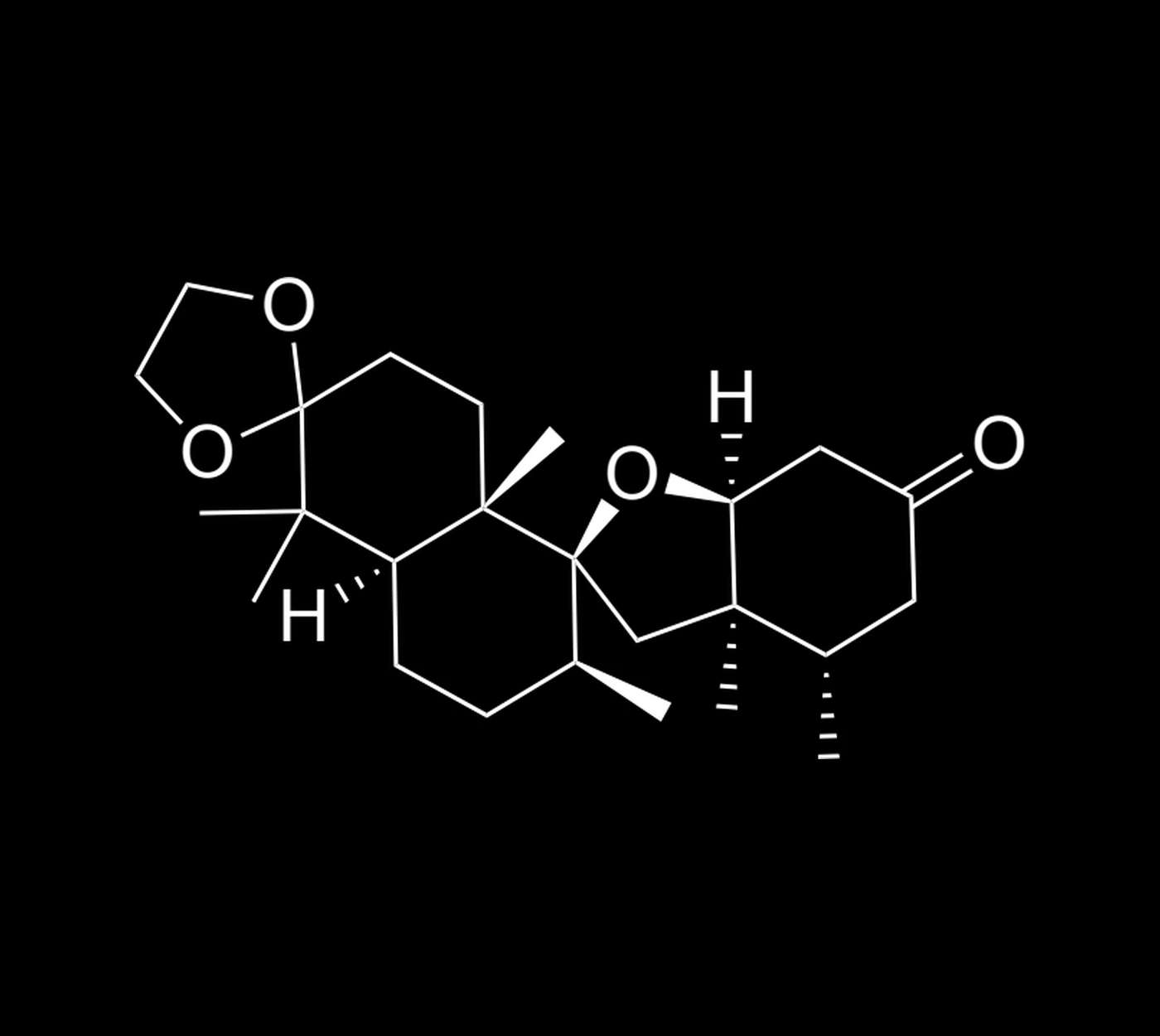
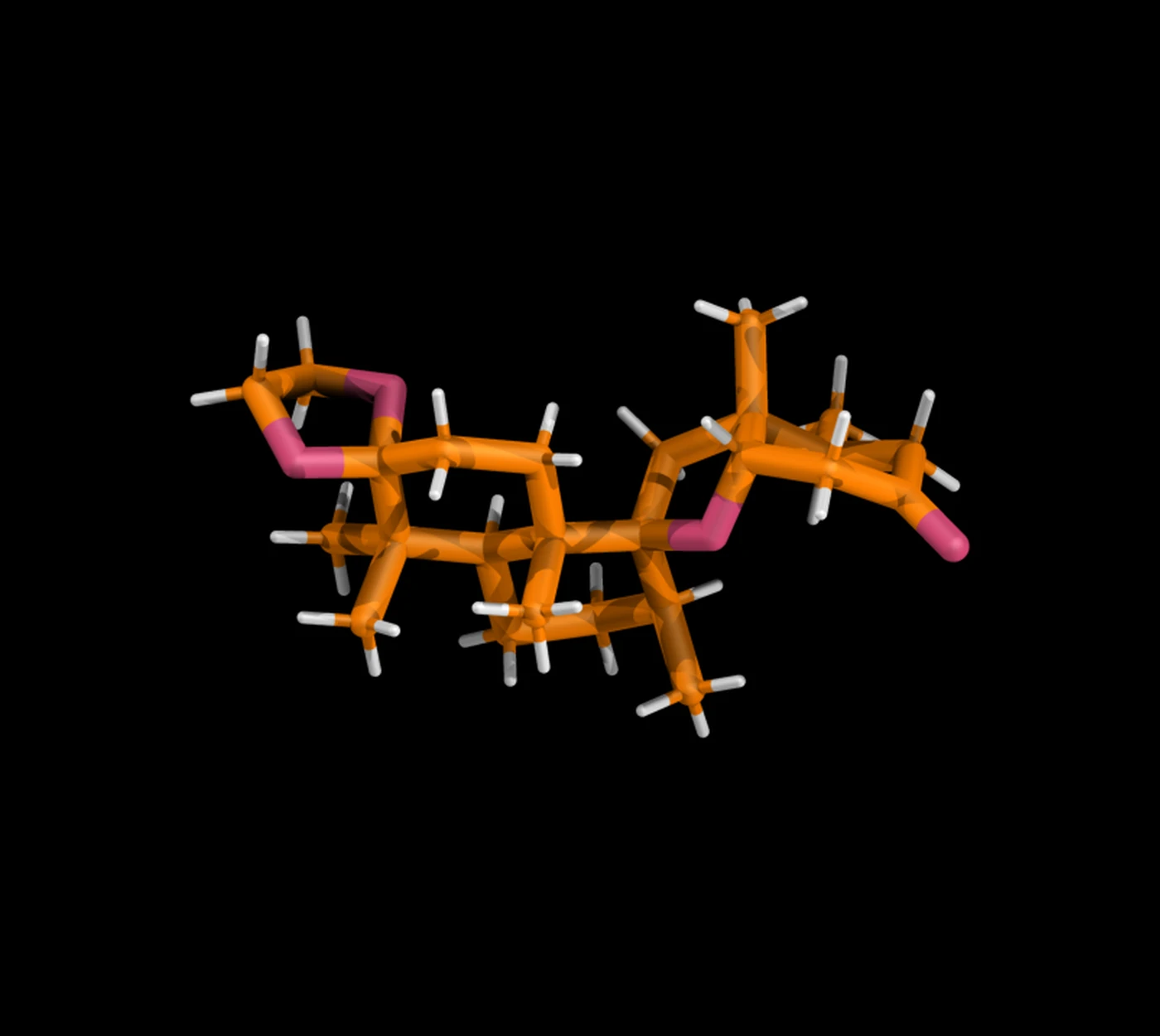
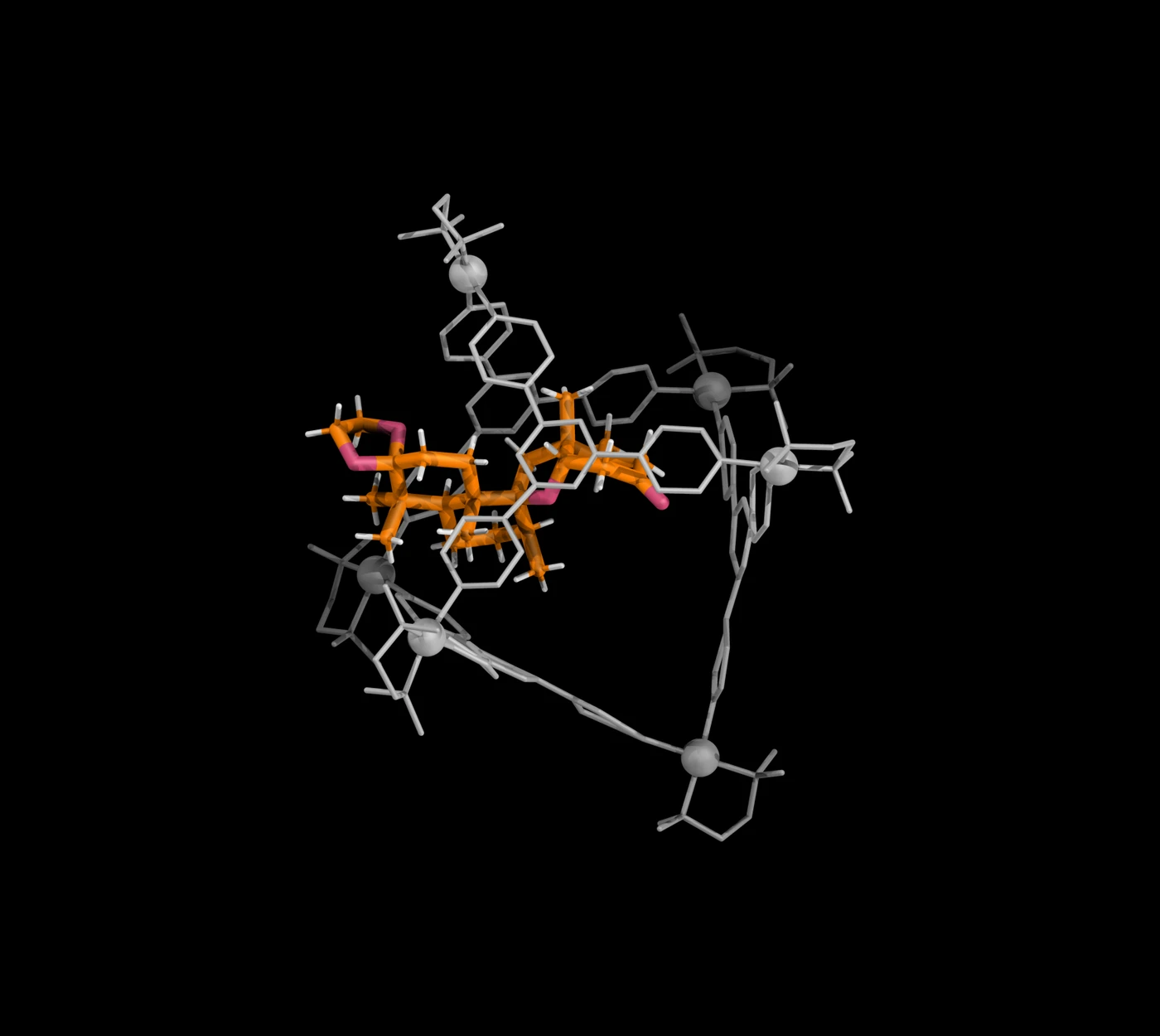
Synthetic intermediate 6 resolved by the crystalline-sponge method.
A stereochemically dense waypoint in the total-synthesis landscape of the asnovolin spiromeroterpenoids.
G011 · Synthetic intermediate
C25H40O4 · 404.59 g mol−1
First crystal structure · Nature Chemistry 2025 · compound 6 →
INTERACTIVE 3D STRUCTURE
Drag to rotate, scroll to zoom, switch the cage on or off, and export the current view.
Synthetic intermediate 6 resolved by the crystalline-sponge method.
A stereochemically dense waypoint in the total-synthesis landscape of the asnovolin spiromeroterpenoids.
MOLECULAR HISTORY
The asnovolins are compact, highly oxygenated spiromeroterpenoids. Their crowded ring systems make stereochemical control—and direct structural verification of advanced intermediates—central problems in synthesis.
A family of meroterpenoids with unusual carbon skeletons was isolated from Aspergillus novofumigatus, defining a new target class for biosynthetic and synthetic studies.1
Pathway reconstruction in the same fungus elucidated novofumigatonin biosynthesis and identified the oxidative enzymes that generate its highly oxygenated, orthoester-containing framework.2
A unified fragment-coupling strategy delivered the first asymmetric total syntheses of the asnovolins and related spiromeroterpenoids, creating advanced intermediates for structural study.3
A minute sample from the asnovolin synthesis program was analysed inside a symmetry-mismatched coordination cage, resolving its fused rings and oxygenated substituents without requiring crystals of the intermediate itself.4
WHY THIS STRUCTURE MATTERS
Advanced synthesis intermediates are often scarce, conformationally flexible and reluctant to crystallize. This structure shows how the crystalline-sponge method can turn such an analytical bottleneck into direct three-dimensional evidence.
SOURCE PUBLICATION
Nature Chemistry 2025
DOI 10.1038/s41557-025-01750-x ↗