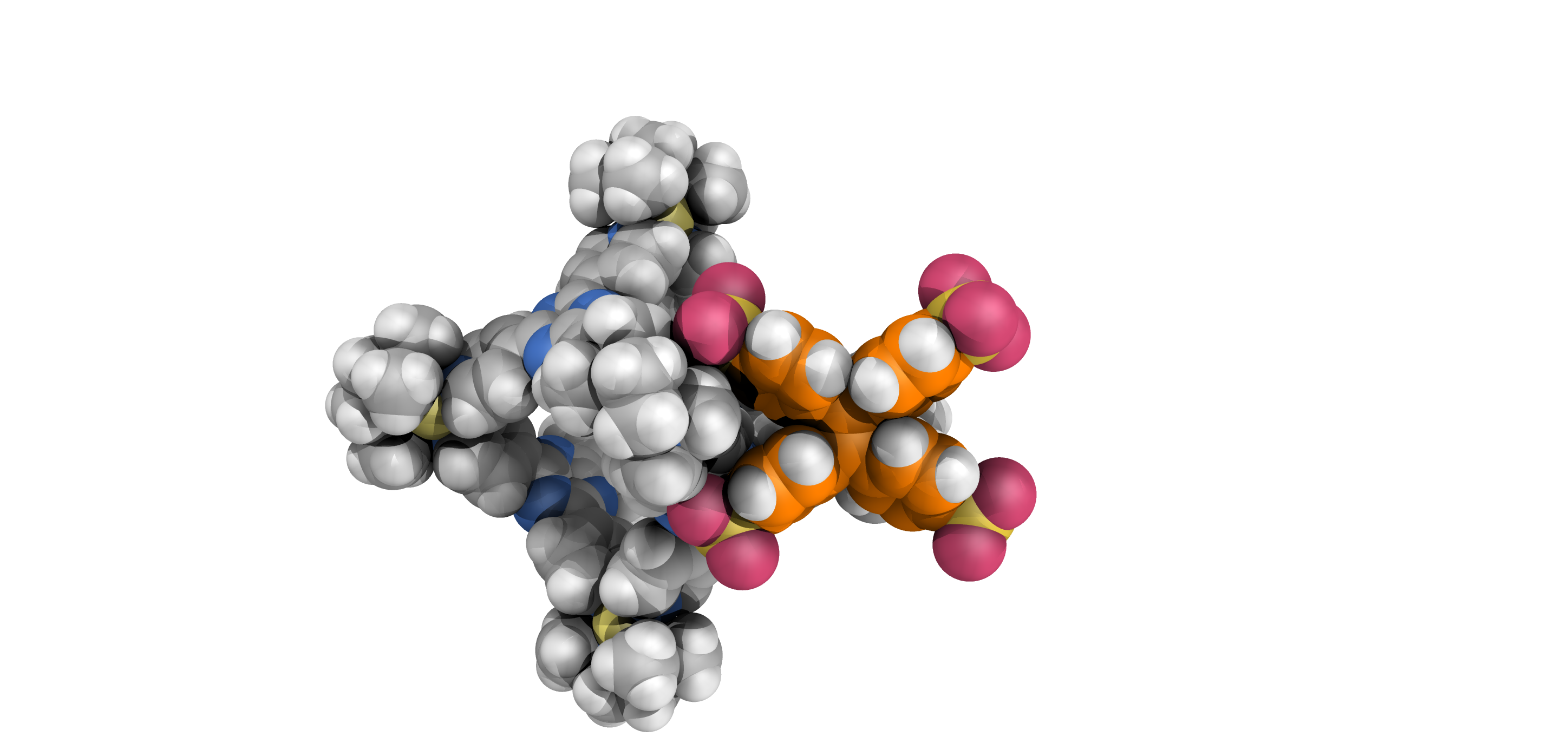
A pocket in water
The cage’s hydrophobic interior can favour the uptake of organic guests from water. Open windows allow molecules to enter and leave.
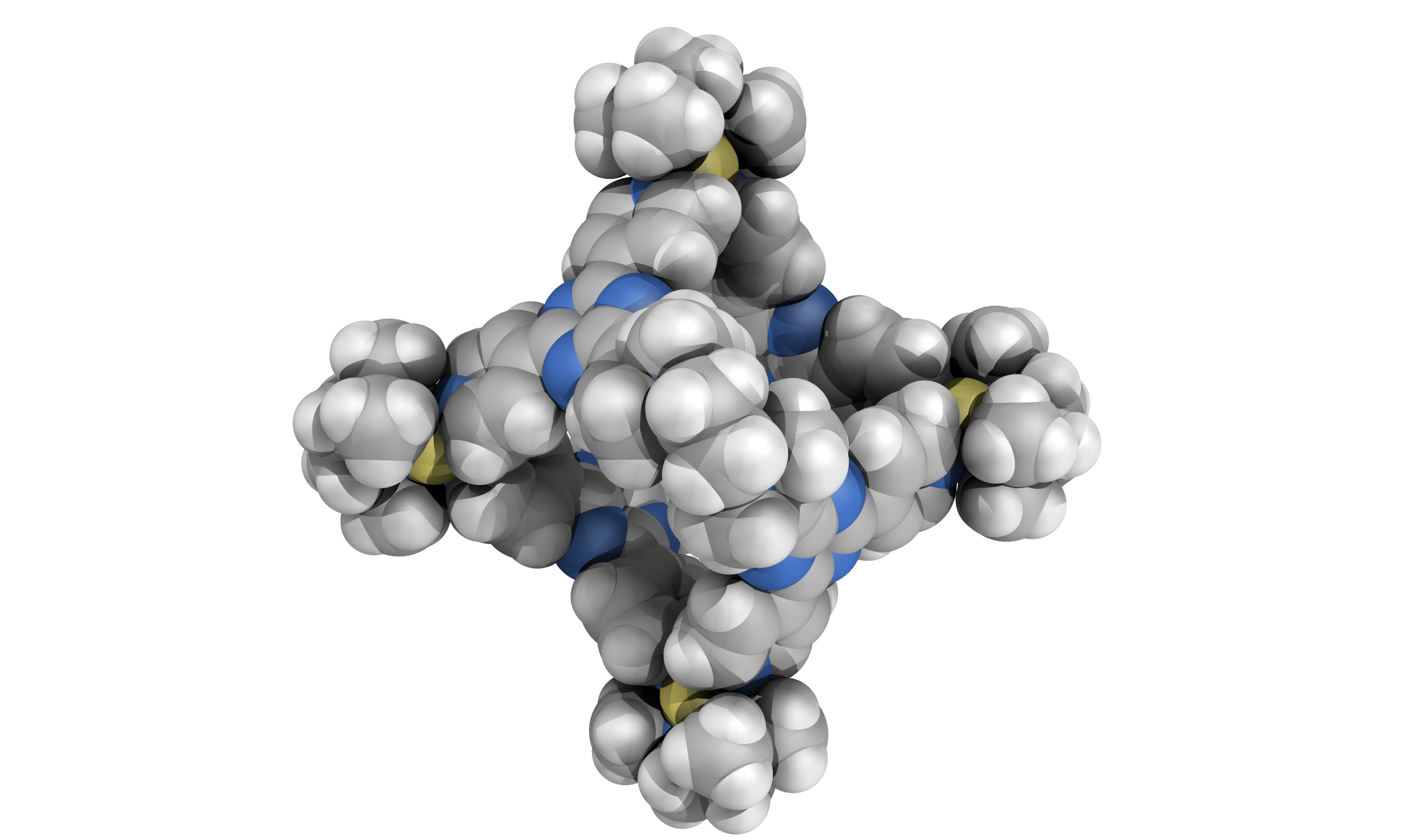
INSIDE THE M6L4 CAGE
Six metal centres. Four ligands.
A cavity that recognises molecules—and reshapes what they can do.
01 / RECOGNITION
The cage is a host; the molecule it binds is a guest. Recognition emerges from the fit between the guest, the cavity and the surrounding solvent.
The cage’s hydrophobic interior can favour the uptake of organic guests from water. Open windows allow molecules to enter and leave.
Size, shape and noncovalent contacts determine how a guest is accommodated. When guests share the cavity, their interactions also matter.
Inside, a molecule has fewer ways to move and fold. Confinement can stabilise unusual conformations and expose particular sites to reaction.
02 / MOLECULAR CONFINEMENT
Three views into the same family of cages. Three ways confinement changes molecular behaviour.
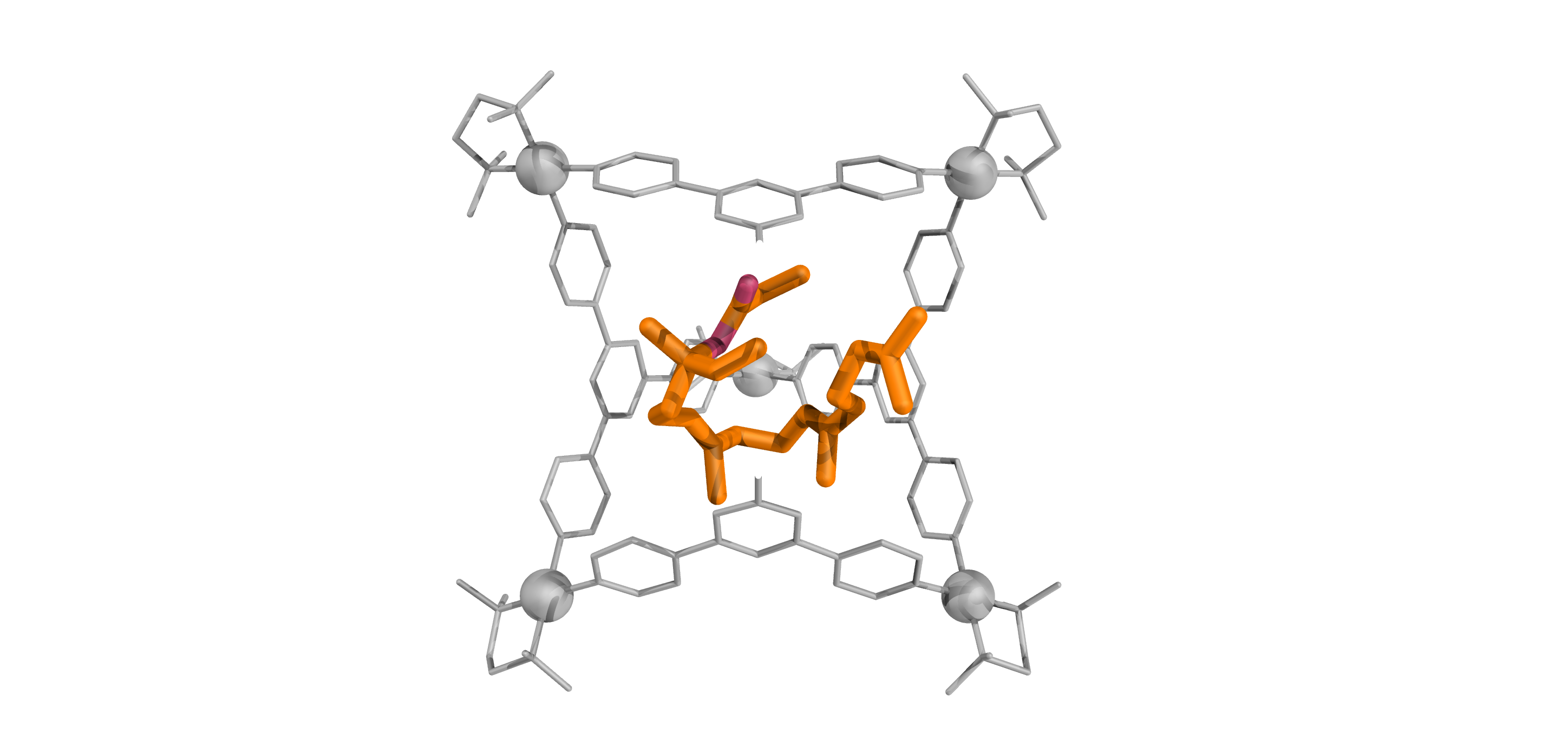
FOLDING / 2019
A flexible linear diterpenoid adopts a U-shaped conformation inside the cage. This arrangement shields internal carbon–carbon double bonds, enabling selective reaction at an exposed site.
Conformation controls accessibility.
Takezawa, Kanda, Nanjo & Fujita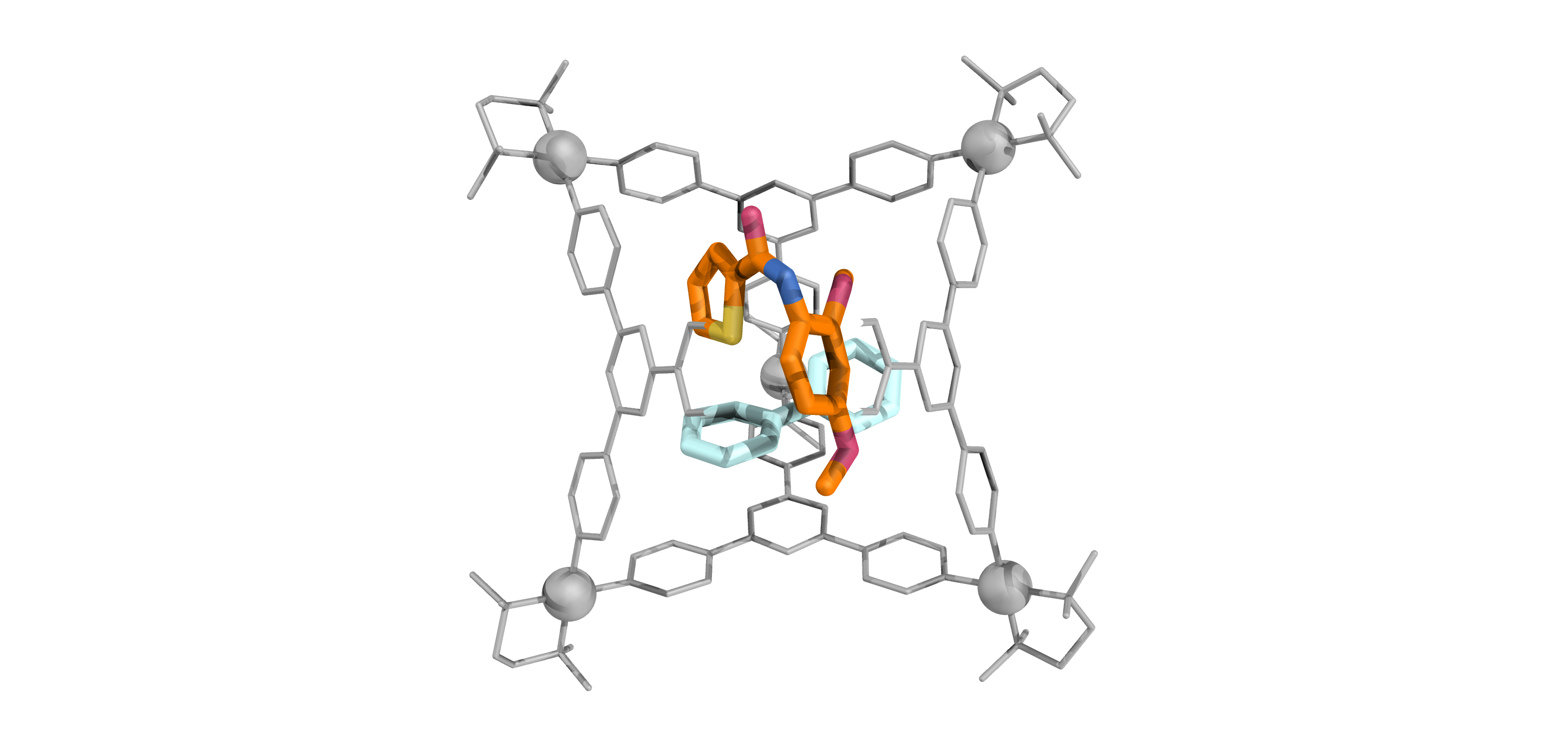
TWISTING / 2020
Encapsulation stabilises a twisted amide conformation. Distorting the normally planar amide weakens its conjugation and accelerates hydrolysis.
Conformation changes chemical reactivity.
Takezawa, Shitozawa & Fujita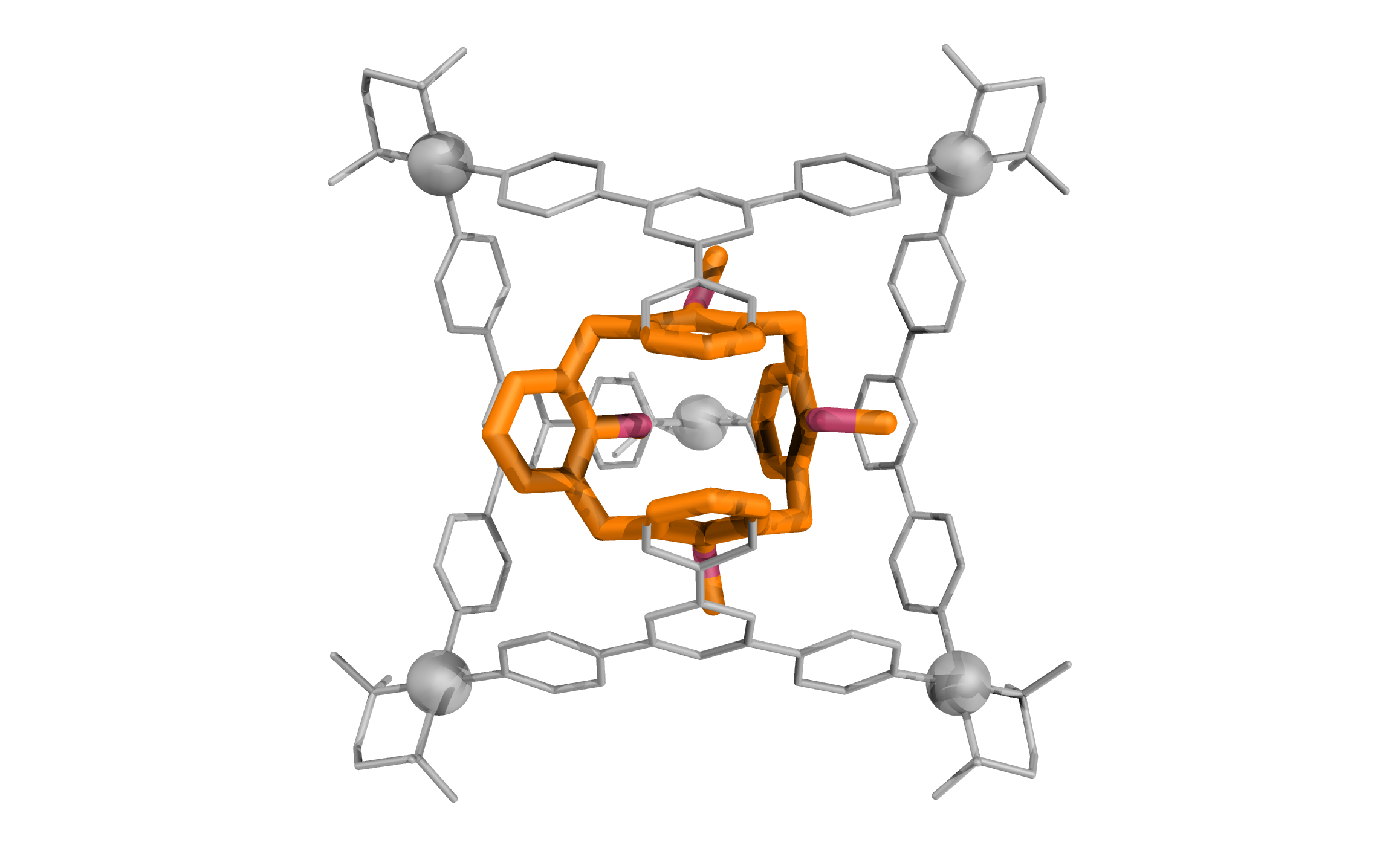
SITE DIFFERENTIATION / 2023
Confinement enforces a particular calix[4]arene conformation. The surrounding cage differentiates chemical sites, providing a route to selective functionalisation.
Conformation creates distinct chemical sites.
Iizuka, Takezawa & Fujita03 / FROM RECOGNITION TO SEEING
Binding a guest is only the beginning. To see it by X-ray diffraction, the host–guest complex must form a crystal in which the guest is sufficiently ordered.
Electrostatic assembly with “sticker” anions links cationic cages into crystalline materials. Controlling this assembly helps carry solution-state host–guest chemistry into the solid state—and opens the way to cage-based crystalline sponges.