Catharanthine resolved by the crystalline-sponge method.
A cornerstone iboga alkaloid and a biosynthetic partner in the story of the Vinca anticancer drugs.
G020 · Alkaloid
C21H24N2O2 · 336.44 g mol−1
First crystal structure · Angewandte Chemie International Edition 2026 · compound 9 →
INTERACTIVE 3D STRUCTURE
Drag to rotate, scroll to zoom, switch the cage on or off, and export the current view.
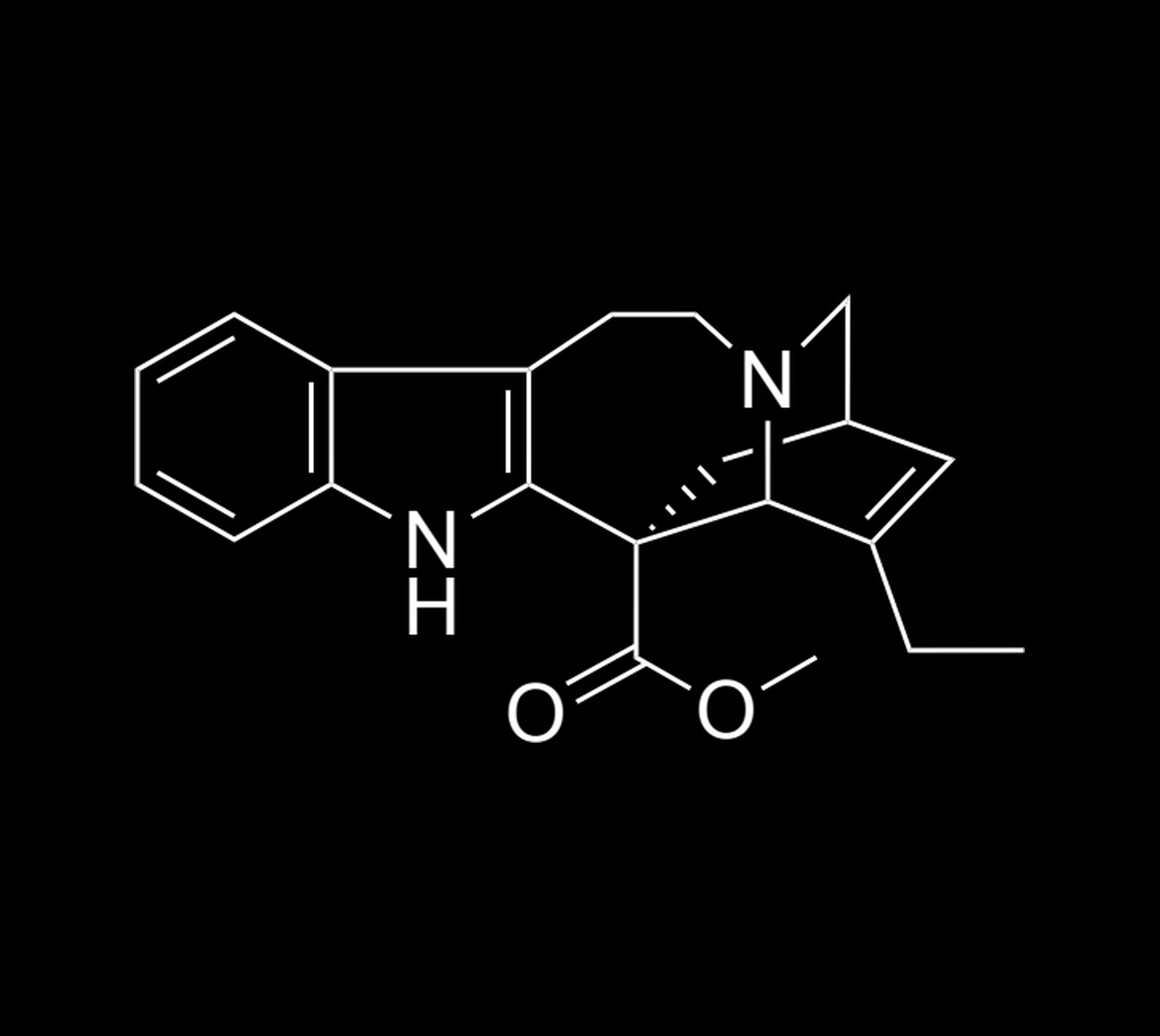
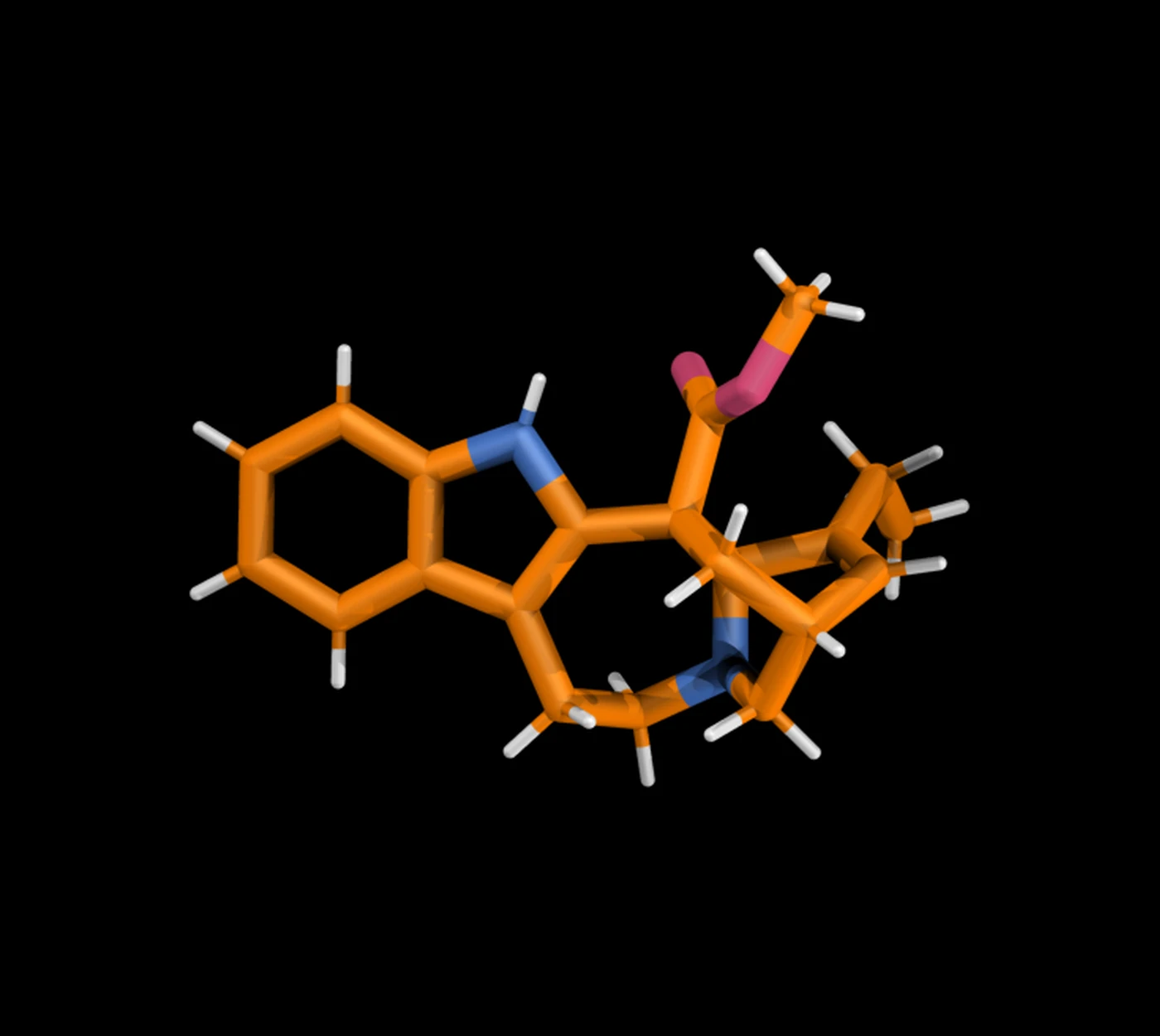
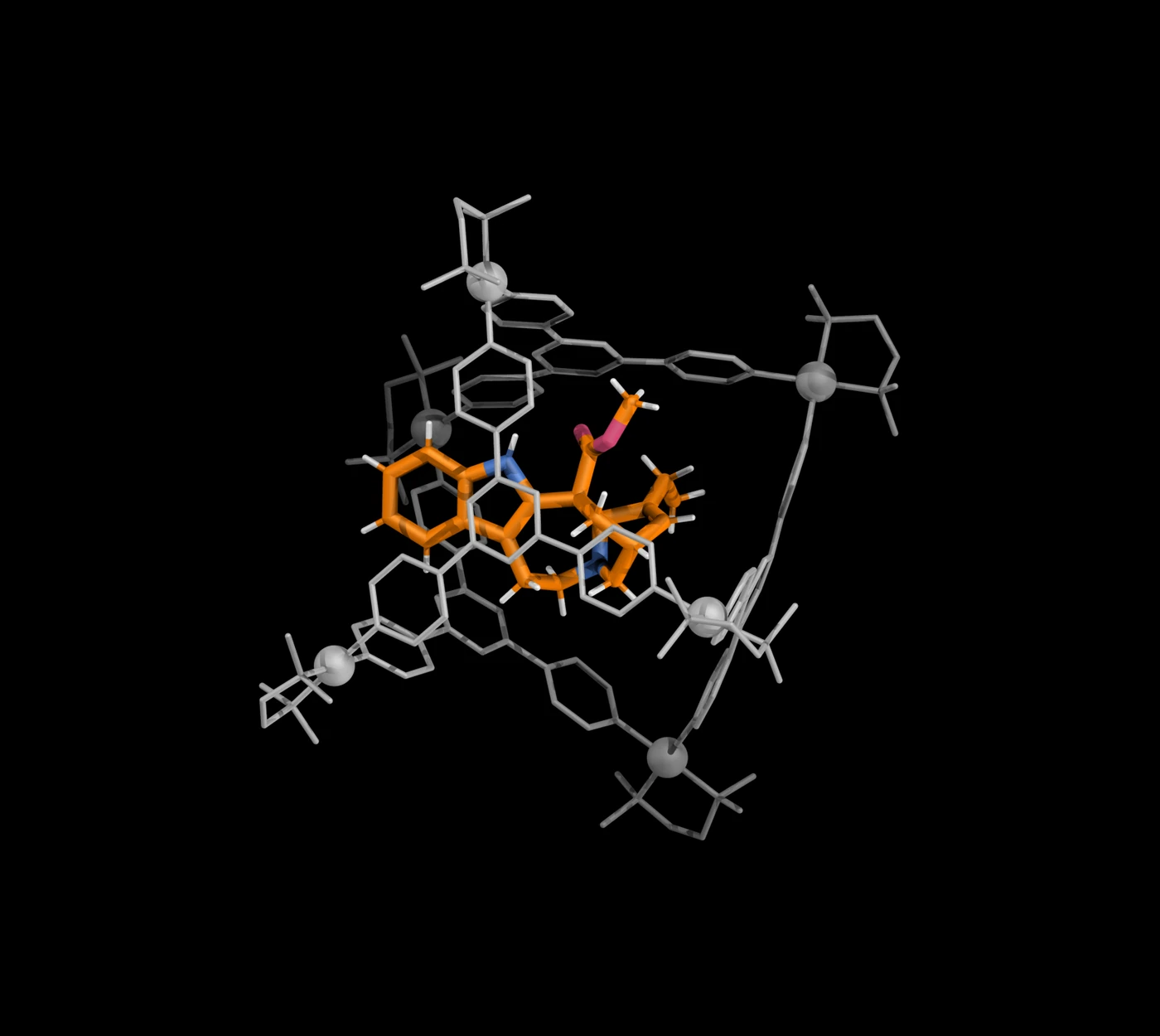
Catharanthine resolved by the crystalline-sponge method.
A cornerstone iboga alkaloid and a biosynthetic partner in the story of the Vinca anticancer drugs.
MOLECULAR HISTORY
Catharanthine became central to alkaloid synthesis because its iboga framework is both structurally demanding and chemically connected to vinblastine. Yet its absolute configuration remained dependent on indirect evidence until the native molecule was examined by X-ray diffraction.
Gorman, Neuss and co-workers reported catharanthine among the alkaloids of the Madagascar periwinkle, establishing a natural-product lineage closely linked to Vinca alkaloid chemistry.1
Qureshi and Scott demonstrated a biogenetic-type synthesis of racemic catharanthine, translating ideas about alkaloid biosynthesis into laboratory construction of the iboga skeleton.2
Büchi and co-workers reported syntheses of velbanamine and catharanthine, making the compound an enduring benchmark for complex indole-alkaloid synthesis.3
A reductive dienamine strategy enabled a concise five-step synthesis through the elusive dehydrosecodine intermediate.4
The crystalline sponge produced the first X-ray confirmation of catharanthine’s absolute configuration, replacing inference from derivative studies with direct crystallographic evidence.5
WHY THIS STRUCTURE MATTERS
The molecule had been isolated and synthesized for decades, but its absolute configuration was still supported indirectly. The 2026 result supplied the missing direct X-ray confirmation.
SOURCE PUBLICATION
Angewandte Chemie International Edition 2026
DOI 10.1002/anie.202524615 ↗