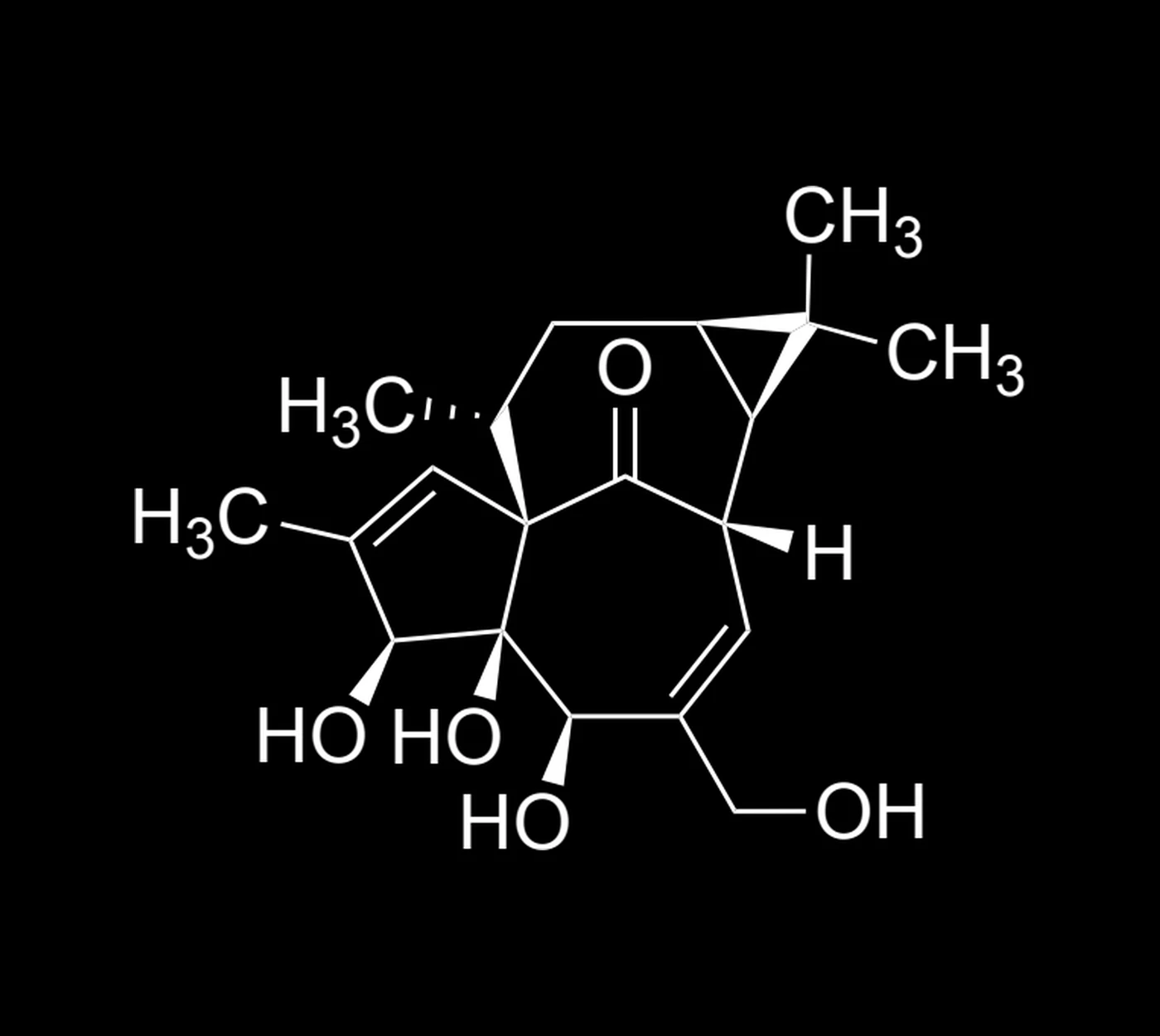
Ingenol resolved by the crystalline-sponge method.
A legendary molecule in natural product chemistry and total synthesis.
G026 · Diterpenoid
C20H28O5 · 348.44 g mol−1
First crystal structure · Angewandte Chemie International Edition 2026 · compound 15 →
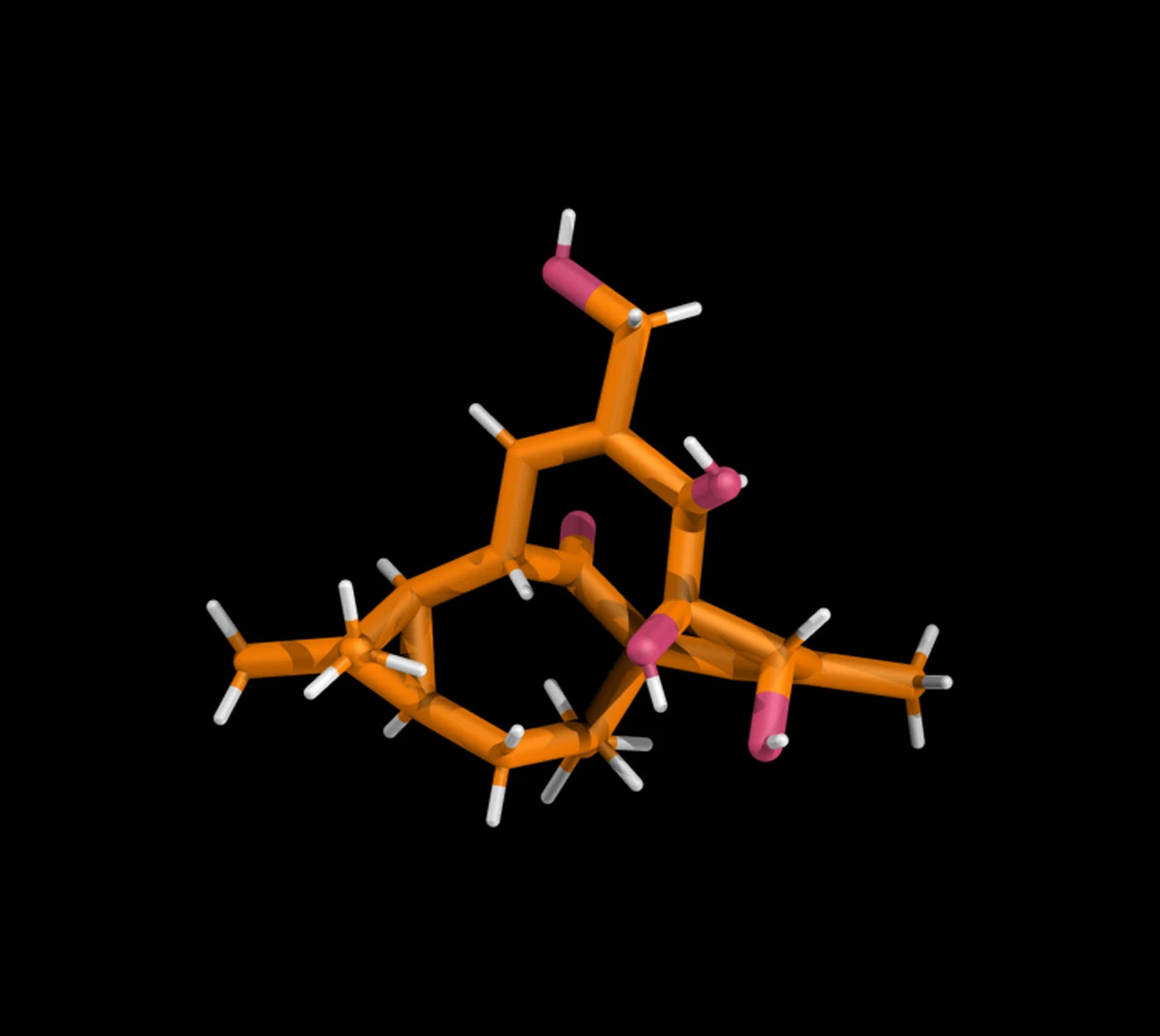
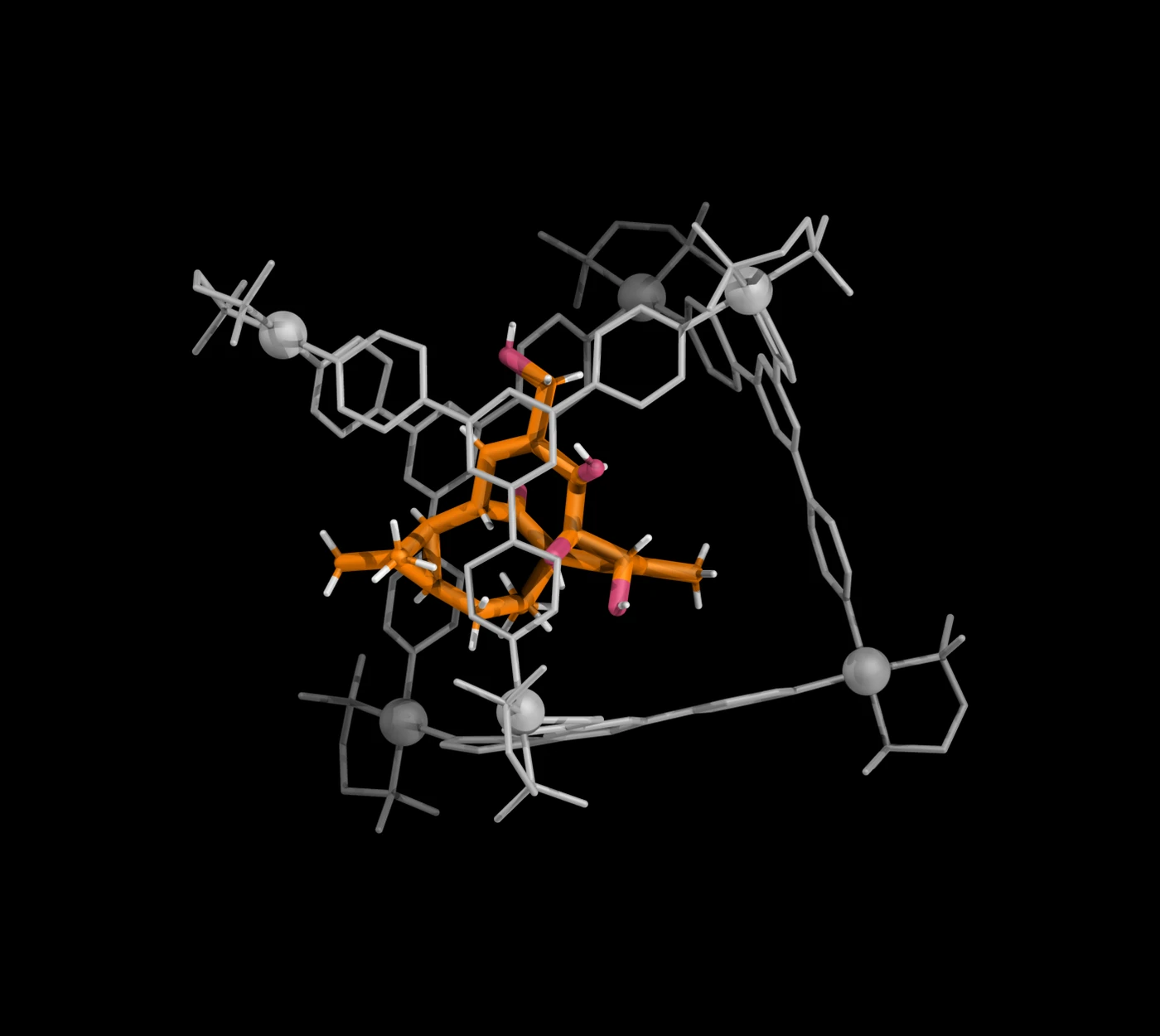
INTERACTIVE 3D STRUCTURE
Drag to rotate, scroll to zoom, switch the cage on or off, and export the current view.
Ingenol resolved by the crystalline-sponge method.
A legendary molecule in natural product chemistry and total synthesis.
MOLECULAR HISTORY
Ingenol challenged structural chemists for six decades. Its densely oxygenated, strained tetracyclic framework inspired repeated synthesis campaigns, while the native molecule itself resisted conventional crystallization.
The synthesis literature traces the first isolation of ingenol to Hecker and co-workers. The natural product was obtained from Euphorbia ingens, from which its name was derived.1
Because native ingenol did not provide a suitable crystal, its tetracyclic framework was established through X-ray analysis of ingenol triacetate. The assignment therefore depended on a derivatized form rather than the native natural product.2
The strained bicyclo[4.4.1]undecane core places the C8 bridgehead stereochemistry in the broader context of in/out isomerism—one reason an unambiguous native-form determination remained valuable.3
The crystalline sponge organized native ingenol inside a Pd6L4 cage. The resulting structure directly verified the absolute configuration and resolved the ring junctions without converting ingenol into a crystalline derivative.7
WHY THIS STRUCTURE MATTERS
Earlier crystallographic evidence came from a chemically modified triacetate. The 2026 structure is the first X-ray observation of ingenol itself in its native molecular form, closing the gap between isolation, synthesis and direct solid-state observation.
SOURCE PUBLICATION
Angewandte Chemie International Edition 2026
DOI 10.1002/anie.202524615 ↗