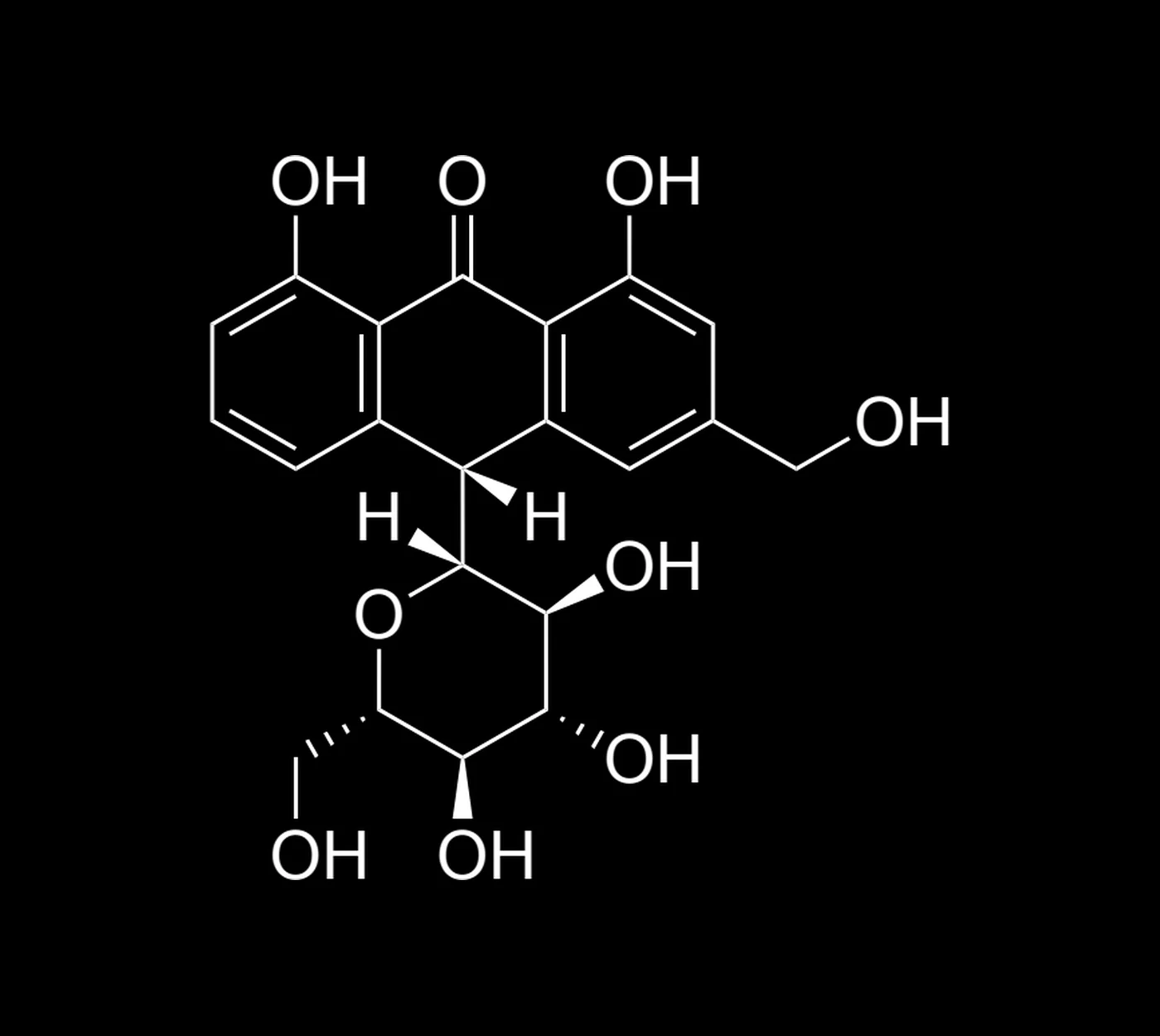
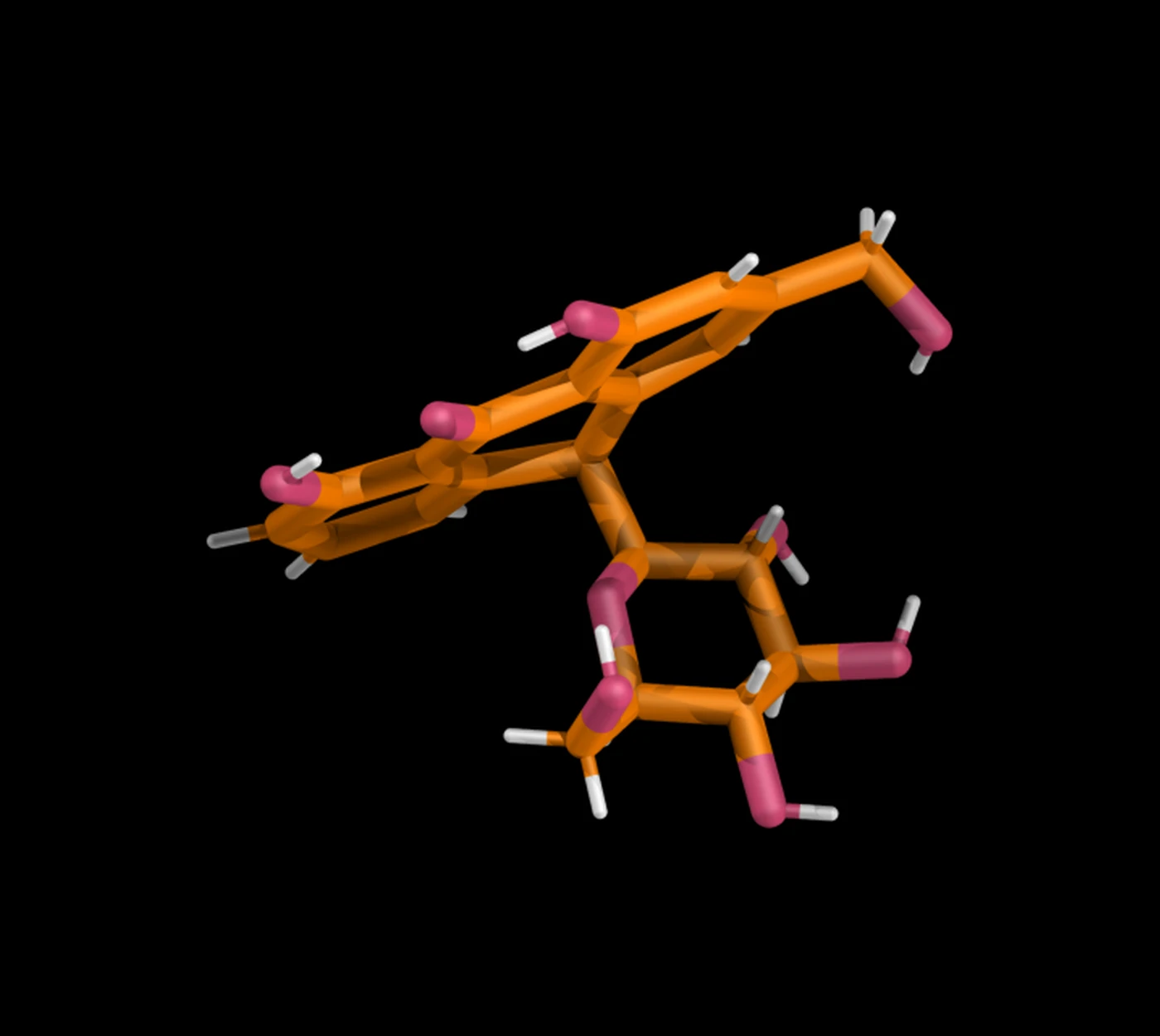
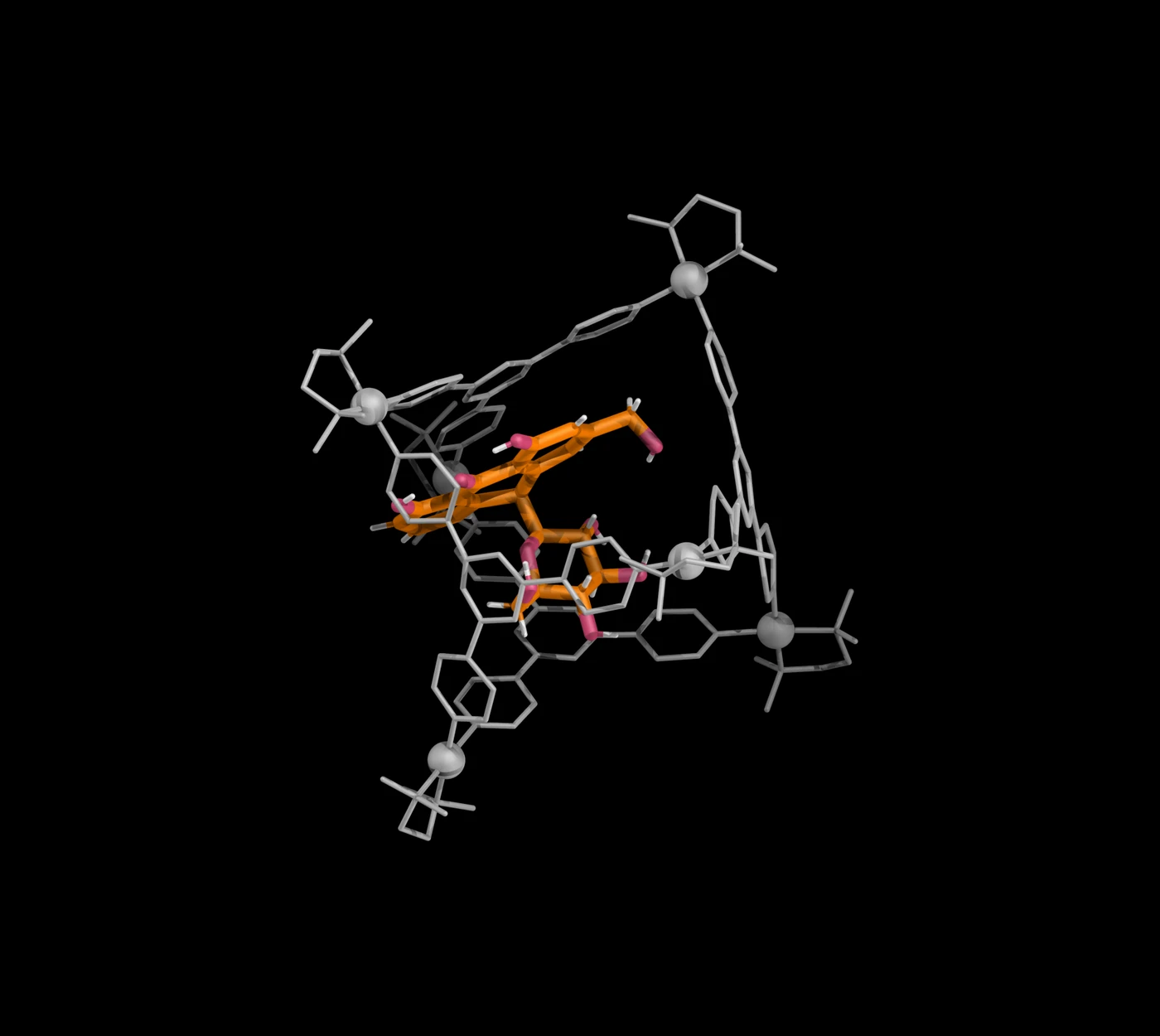
Aloin A resolved by the crystalline-sponge method.
A historic Aloe natural product whose C-glycoside stereochemistry challenged isolation, synthesis and crystallization.
G037 · Anthraquinone glycoside
C21H22O9 · 418.40 g mol−1
First crystal structure · Angewandte Chemie International Edition 2026 · compound 26 →
INTERACTIVE 3D STRUCTURE
Drag to rotate, scroll to zoom, switch the cage on or off, and export the current view.
Aloin A resolved by the crystalline-sponge method.
A historic Aloe natural product whose C-glycoside stereochemistry challenged isolation, synthesis and crystallization.
MOLECULAR HISTORY
Aloin was isolated as the crystalline bitter principle of aloes long before modern spectroscopy. Its A and B forms interconvert, while the anthrone C-glycoside architecture presents an unusually demanding stereochemical and synthetic problem.
Thomas Smith and John Stenhouse described the isolation and purification of “aloine” from Barbados aloes, establishing one of the earliest chemically defined Aloe constituents.1
Rauwald, Lohse and Bats established the configurations of the two diastereomeric C-glucosylanthrones, clarifying the relationship between Aloin A and Aloin B.2
A benzyne–furan strategy produced an advanced analog of 5-hydroxyaloin A and highlighted the difficulty of constructing the anthrone C-glycosidic bond.3
Sequential regioselective Diels–Alder reactions connecting silylbenzynes and a stannylfuran enabled the first reported total synthesis of aloin.4
The crystalline sponge delivered the first definitive crystallographic view of Aloin A and established its absolute configuration directly.5
WHY THIS STRUCTURE MATTERS
More than 170 years after aloin entered chemical literature, Aloin A still lacked a definitive native-form crystal model. The crystalline-sponge structure makes its full three-dimensional configuration directly visible.
SOURCE PUBLICATION
Angewandte Chemie International Edition 2026
DOI 10.1002/anie.202524615 ↗