Peiminine resolved by the crystalline-sponge method.
A remarkably intricate steroidal alkaloid with six rings and twelve stereocentres.
G032 · Alkaloid
C27H45NO3 · 431.66 g mol−1
First crystal structure · Angewandte Chemie International Edition 2026 · compound 21 →
INTERACTIVE 3D STRUCTURE
Drag to rotate, scroll to zoom, switch the cage on or off, and export the current view.
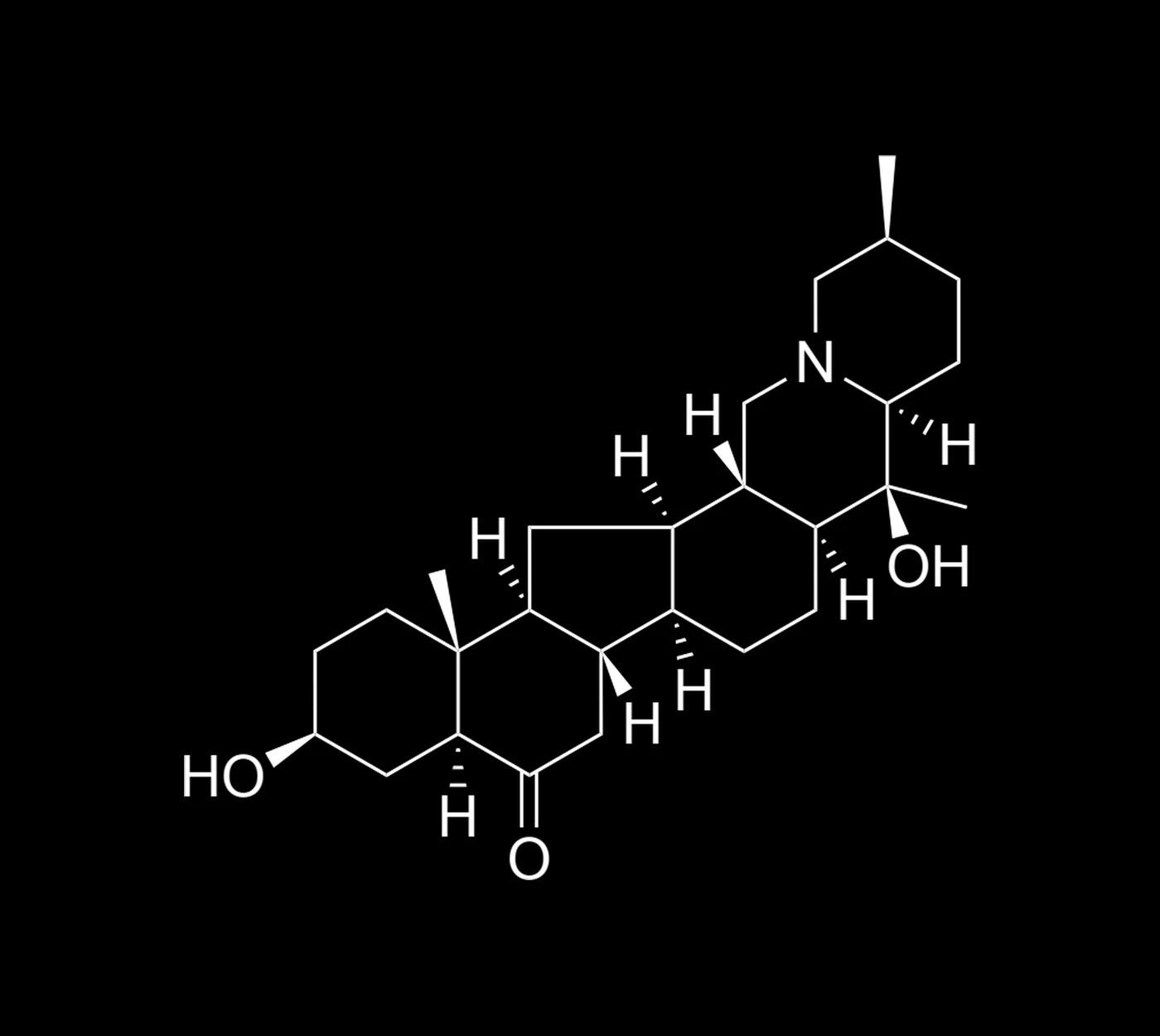
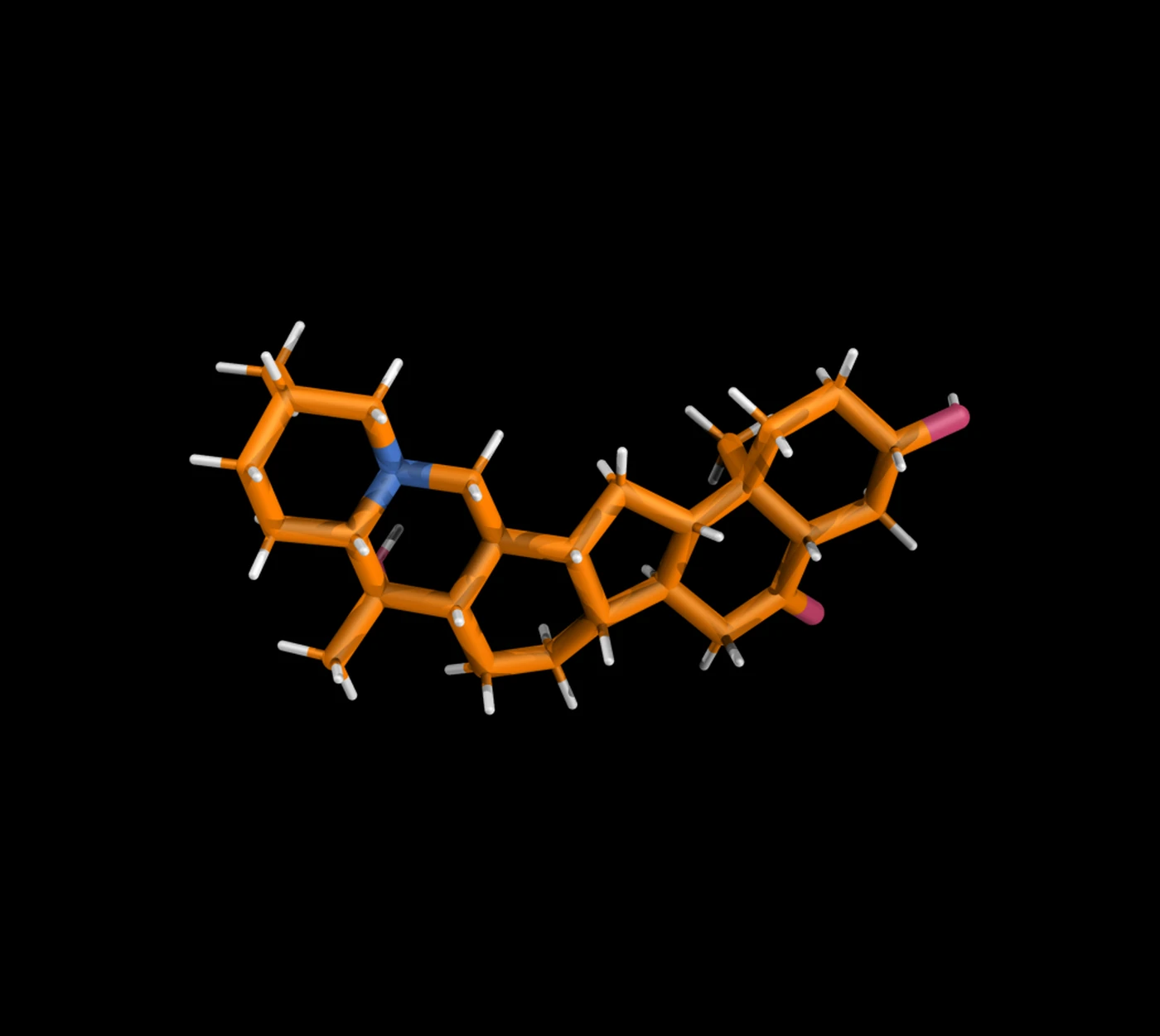
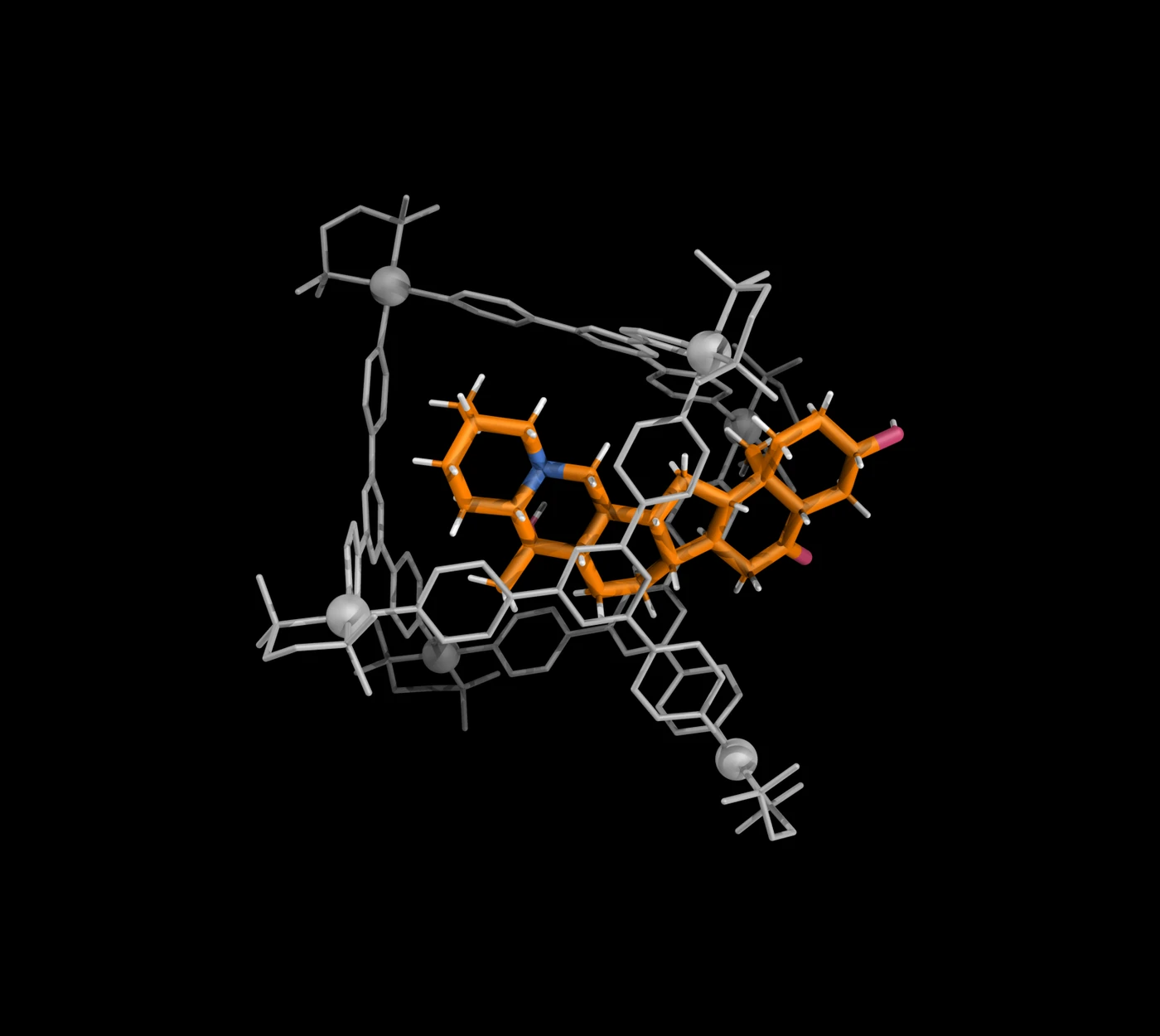
Peiminine resolved by the crystalline-sponge method.
A remarkably intricate steroidal alkaloid with six rings and twelve stereocentres.
MOLECULAR HISTORY
Peiminine belongs to the densely functionalized Fritillaria steroidal alkaloids. Earlier structural work relied on salts, derivatives and powder diffraction because the neutral native compound resisted single-crystal analysis.
Chi, Kao and Chang reported the isolation of peimine from Fritillaria roylei, opening the systematic chemical study of this closely related alkaloid family.1
The structure of verticinone methobromide was investigated by X-ray diffraction, illustrating the historical need to convert the alkaloid into a crystalline ionic derivative.2
A full crystal and molecular structure of verticinone methyl bromide established detailed stereochemical information for the derivatized alkaloid.3
Powder X-ray diffraction supplied unit-cell parameters and a space group for peiminine, but not the complete atomic single-crystal model of the native molecule.4
The crystalline sponge yielded single crystals of native peiminine for the first time and resolved the absolute configurations of all twelve stereocentres.5
WHY THIS STRUCTURE MATTERS
Derivative crystals and powder patterns had supplied important clues, but the native molecule itself had not yielded a complete single-crystal structure. The crystalline-sponge result directly resolves its exceptionally dense stereochemistry.
SOURCE PUBLICATION
Angewandte Chemie International Edition 2026
DOI 10.1002/anie.202524615 ↗