G033 · Triterpenoid

Asiatic acid

C30H48O5 · 488.71 g mol−1

First crystal structure · Angewandte Chemie International Edition 2026 · compound 22 →

Back to Catalogue

INTERACTIVE 3D STRUCTURE

Explore Asiatic acid in its crystalline sponge

Drag to rotate, scroll to zoom, switch the cage on or off, and export the current view.
CHONCage
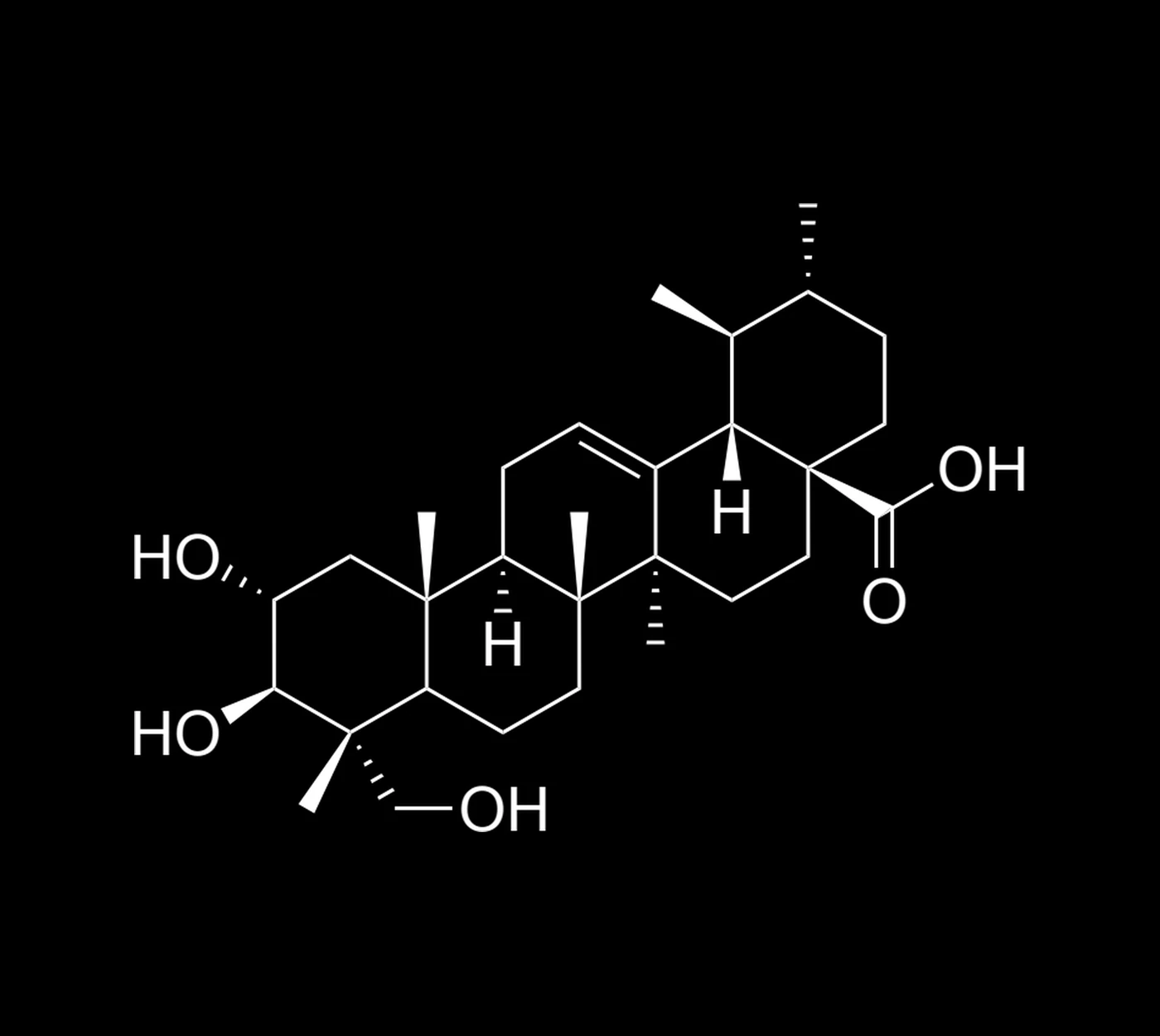
2D chemical structure of Asiatic acid
Asiatic acid · 2D chemical structure
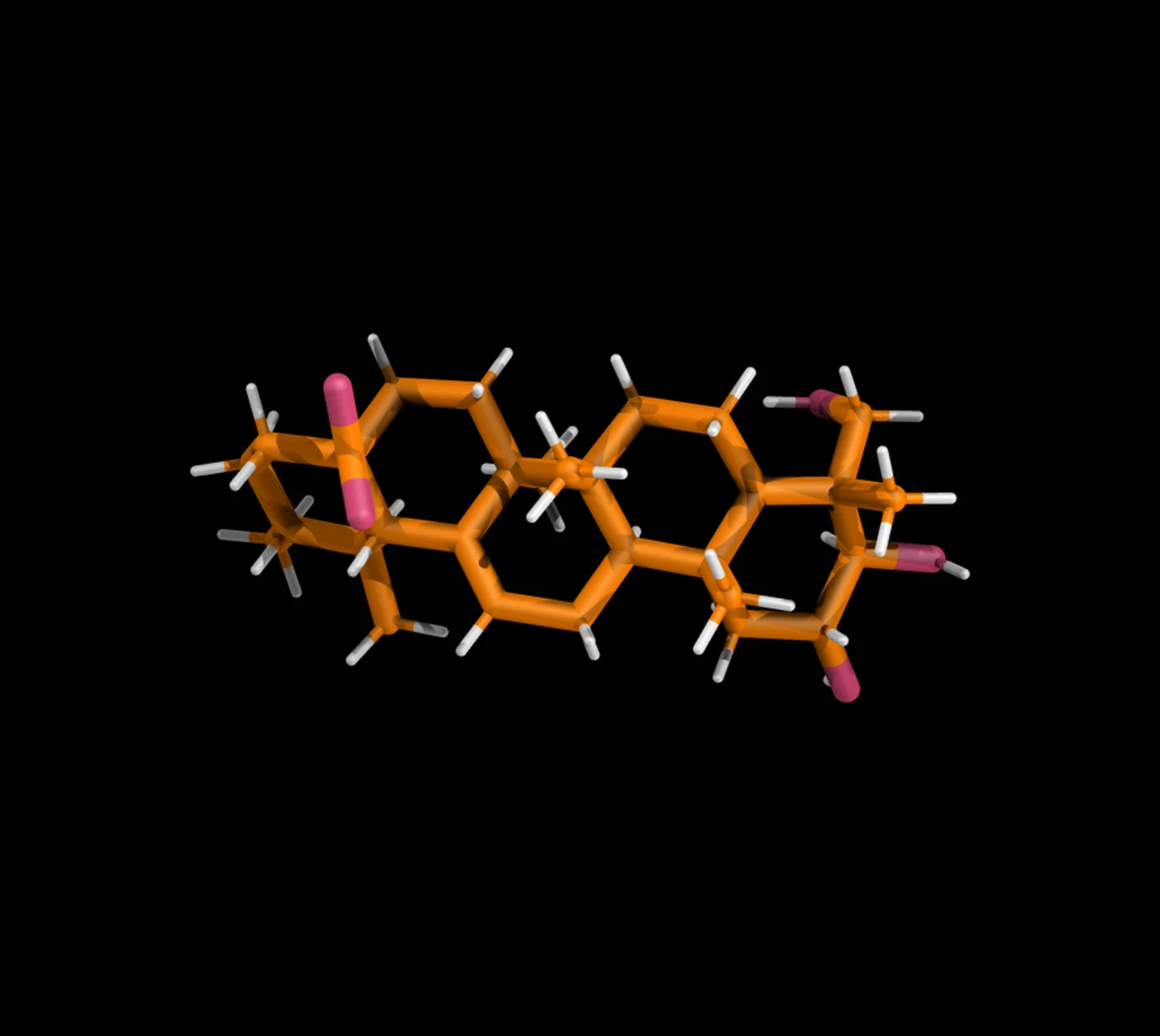
3D crystal structure of Asiatic acid determined by the crystalline-sponge method
Asiatic acid · crystalline-sponge guest structure
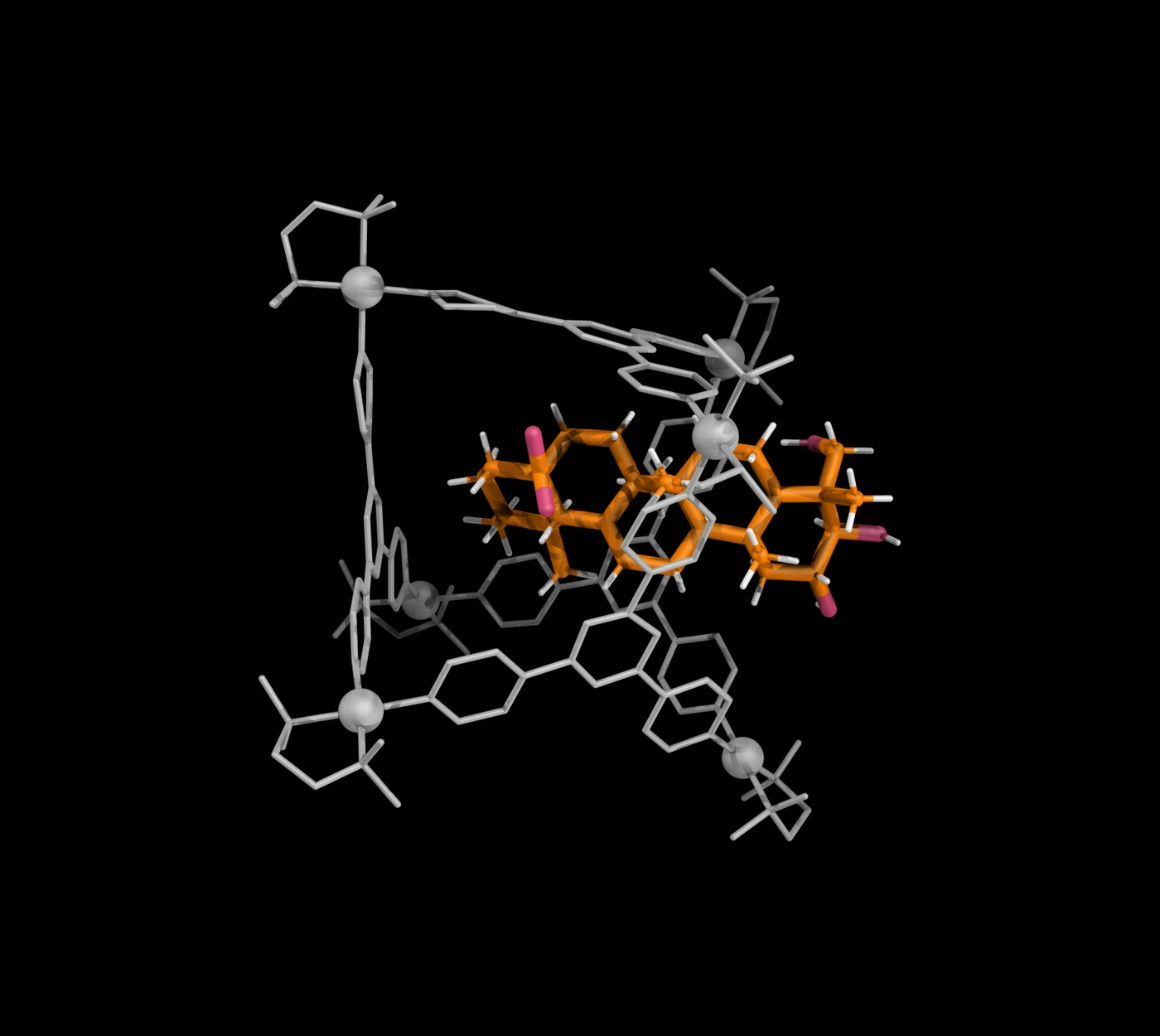
Asiatic acid inside a crystalline sponge coordination cage
Asiatic acid · coordination-cage host–guest structure

Asiatic acid resolved by the crystalline-sponge method.

A celebrated pentacyclic triterpenoid at the heart of Centella asiatica chemistry.

Molecular formula
C30H48O5
Molecular weight
488.71 g mol−1
CCDC accession
2463250 ↗
Host
Pd6L4 cage
Study
Angew. Chem. 2026
Compound in publication
22

MOLECULAR HISTORY

From medicinal-plant chemistry to eleven stereocentres in one view

Asiatic acid emerged from the mid-century investigation of Centella asiatica constituents. Its polar hydroxyl groups and carboxylic acid support biological activity and derivative chemistry, but also frustrate conventional crystallization.

  1. 1949

    Defined as the aglycone of asiaticoside

    Parallel Nature reports connected the medicinal glycoside asiaticoside to the pentacyclic triterpene acid now known as asiatic acid.1, 2

  2. 2016

    A platform for medicinal-chemistry derivatives

    Systematic modification of the hydroxyl-rich A ring and carboxyl terminus produced new anticancer-oriented derivatives, emphasizing the molecule’s value as a semisynthetic scaffold.3

  3. 2024

    Reconstructed by synthetic biology

    Engineered yeast was used to biosynthesize asiatic acid through coordinated cytochrome-P450 oxidation, offering an alternative route to this plant-derived triterpenoid.4

  4. 2026

    First reported crystal structure

    Encapsulation in the crystalline sponge suppressed intermolecular aggregation and yielded the first reported X-ray structure of asiatic acid, confirming its pentacyclic skeleton and eleven stereocentres.5

WHY THIS STRUCTURE MATTERS

A molecule known since the 1940s and widely used as a medicinal-chemistry scaffold still lacked a reported crystal structure. The crystalline-sponge model supplies direct three-dimensional evidence for all eleven stereocentres.

References

  1. Boiteau, P.; Buzas, A.; Lederer, E.; Polonsky, J. “Derivatives of Centella asiatica Used Against Leprosy.” Nature 1949, 163, 258–260. DOI 10.1038/163258a0 ↗
  2. Lythgoe, B.; Trippett, S. “Centelloside.” Nature 1949, 163, 259–260. DOI 10.1038/163259b0 ↗
  3. Gonçalves, B. M. F.; Salvador, J. A. R.; Marín, S.; Cascante, M. “Synthesis and Biological Evaluation of Novel Asiatic Acid Derivatives with Anticancer Activity.” RSC Adv. 2016, 6, 3967–3985. DOI 10.1039/C5RA19120C ↗
  4. “Biosynthesis of Plant-Derived Triterpenoid Asiatic Acid in Saccharomyces cerevisiae Cell Factories.” Bioorg. Chem. 2024, 153, 107861. DOI 10.1016/j.bioorg.2024.107861 ↗
  5. He, W.; Takezawa, H.; Fujita, M. Angew. Chem. Int. Ed. 2026, 65, e202524615. DOI 10.1002/anie.202524615 ↗

SOURCE PUBLICATION

Second-Generation Crystalline Sponges Enabling Consistent Structure Analysis Under Standardized Conditions for Diverse Molecules

Angewandte Chemie International Edition 2026

DOI 10.1002/anie.202524615 ↗