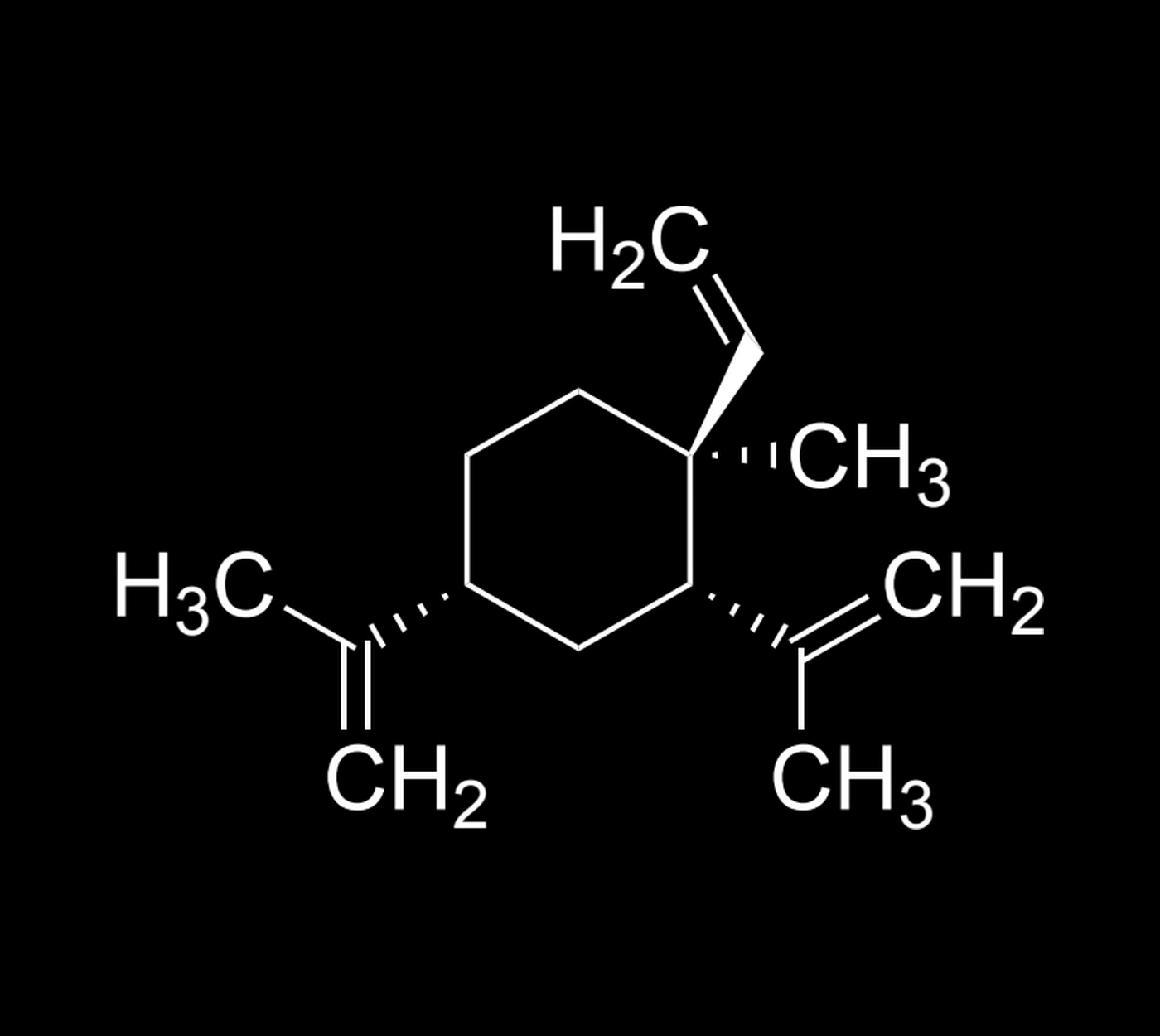
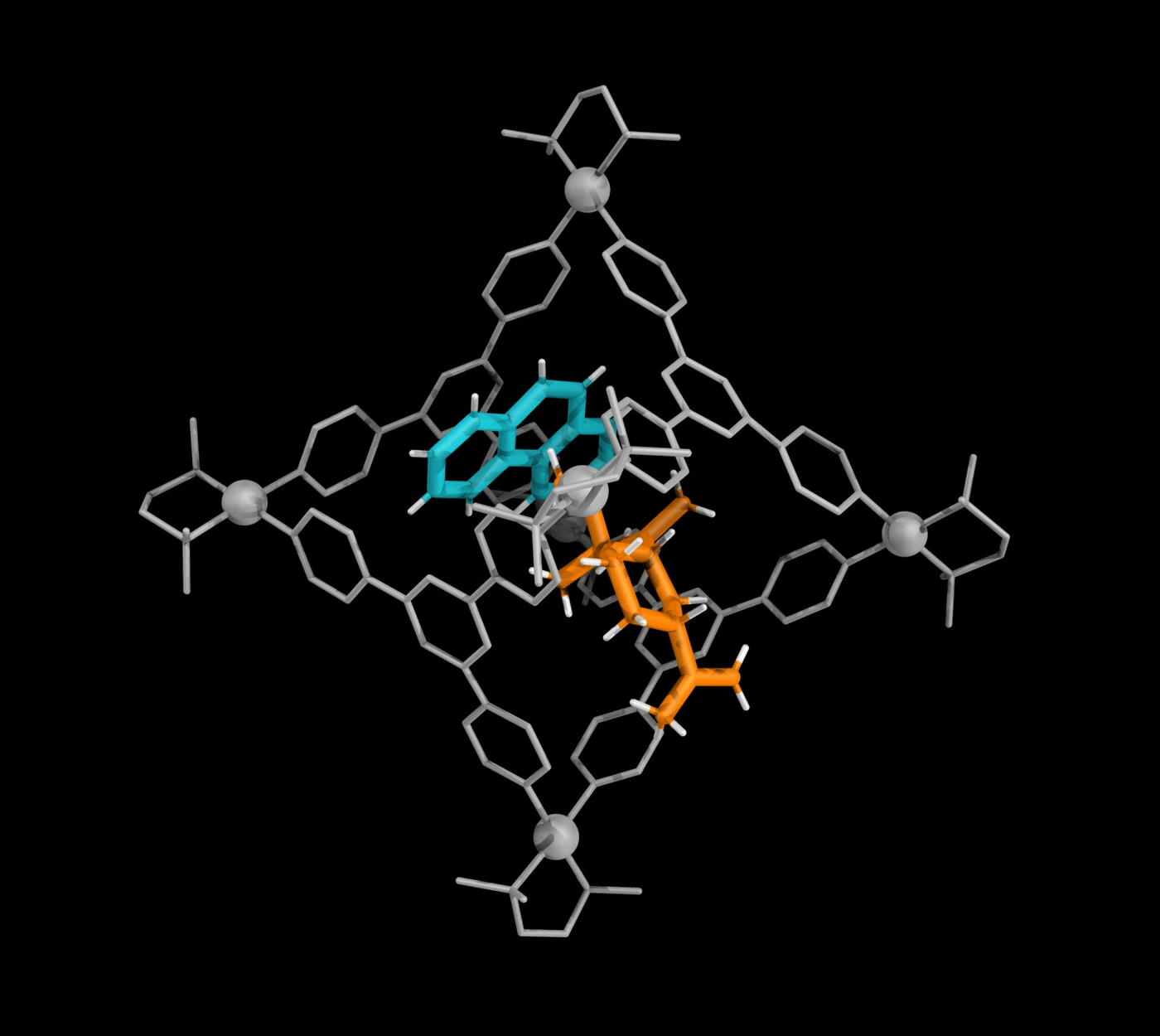
(−)-β-Elemene (compound 8) was structurally analyzed using cage 1a and phenanthrene (2a) in the size-compensation strategy for low-polarity small molecules.
G078 · Sesquiterpenoid
(−)-β-Elemene
C15H24 · 204.36 g mol−1
First crystal structure · Reported for the unmodified analyte in this study → · Read the story ↓
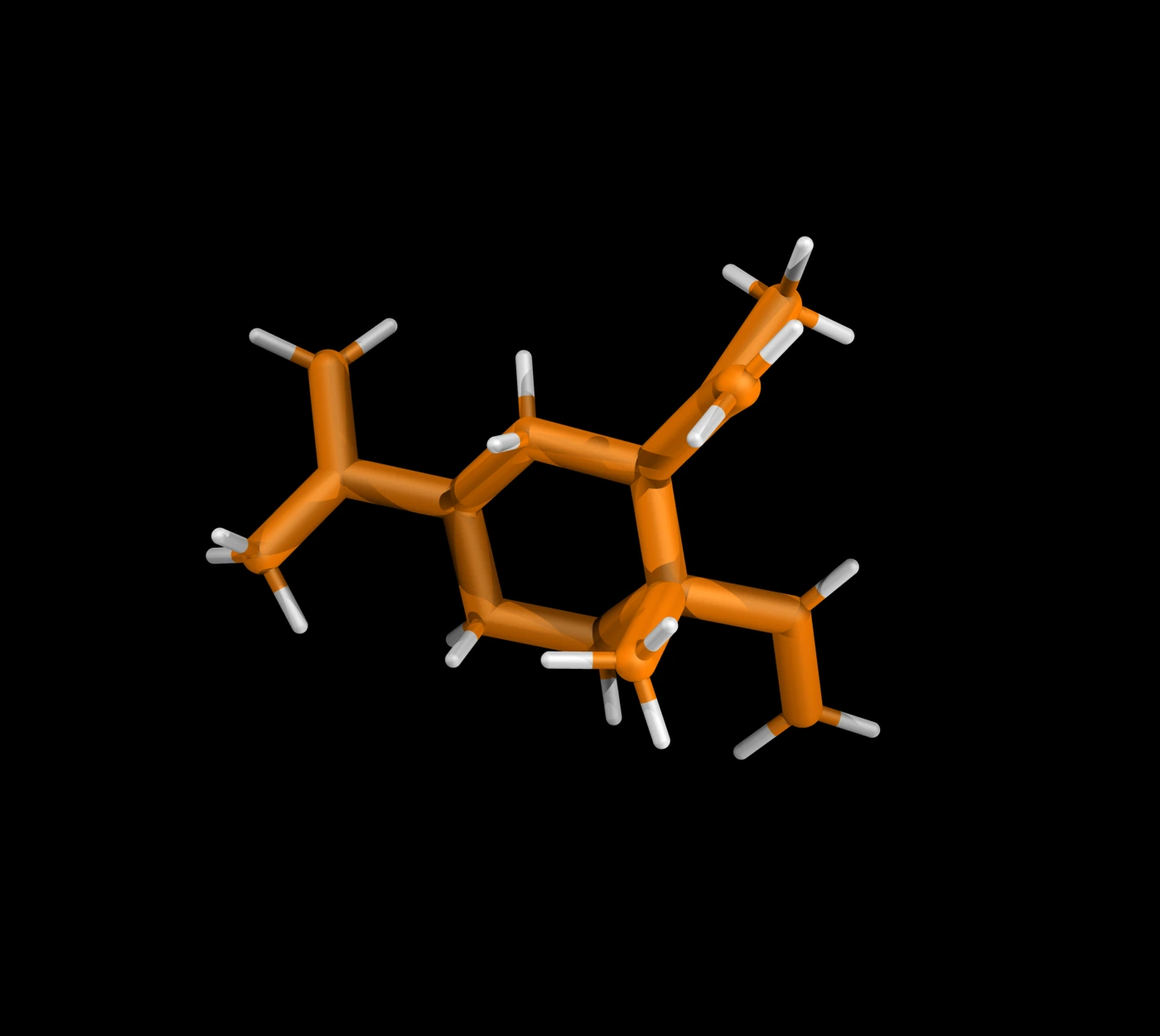
INTERACTIVE 3D STRUCTURE
Explore (−)-β-Elemene in its crystalline sponge
Drag to rotate, scroll to zoom, switch the cage on or off, and export the current view.
CHONCagePhenanthrene 2a
- Molecular formula
- C15H24
- Molecular weight
- 204.36 g mol−1
- CCDC accession
- 2565730 ↗
- Host
- Pd6L4 cage 1a
- Compound in publication
- 8
MOLECULAR HISTORY
From synthetic access to a crystal-bound hydrocarbon
β-Elemene was a synthetic target decades before this structure was measured. Routes from other terpenes made the molecule accessible in the laboratory. The 2026 work addresses a different question: how to resolve the unchanged, weakly interacting hydrocarbon inside a crystal.
- 1967
An early synthetic route
Patil and Rao reported a synthesis of β-elemene and elemol. Their paper marks an early stage in the effort to reach the elemane skeleton through chemical construction—a synthetic history that would continue for decades before the present crystallographic study.1
- 2011
A route from renewable germacrone
In their 2011 report, Barrero and colleagues prepared β-elemene and related elemanes from natural germacrone. The study developed efficient routes and an enantioselective approach, extending the practical ways to obtain molecules in this sesquiterpene family.2
- 2026
The unchanged molecule in a host crystal
The next step is to see the unchanged hydrocarbon in a crystal. Phenanthrene occupies part of cage 1a beside β-elemene, helping organize the small guest for X-ray analysis. The published study reports this among eleven previously unreported analyte crystal structures.3
WHY THIS STRUCTURE MATTERS
The contribution is crystallographic access to the unchanged β-elemene analyte through guest pairing. Its established synthetic history and the new host–guest structure answer complementary questions about preparation and three-dimensional molecular form.
References
- L. J. Patil; A. S. Rao. “Synthesis of β-elemene and elemol.” Tetrahedron Lett. 1967, 8, 2273–2275. DOI 10.1016/S0040-4039(00)90811-6 ↗
- A. F. Barrero; M. M. Herrador; J. F. Quílez del Moral; P. Arteaga; N. Meine; M. C. Pérez-Morales; J. V. Catalán. “Efficient synthesis of the anticancer β-elemene and other bioactive elemanes from sustainable germacrone.” Org. Biomol. Chem. 2011, 9, 1118–1125. DOI 10.1039/C0OB00467G ↗
- W. He; L. Soliman; H. Takezawa; M. Fujita. “Expanding the Chemical Space of Analytes in the 2G Crystalline Sponge Method: Size-Compensation Strategy for the Structural Analysis of Low-Polarity Small Molecules.” Angew. Chem. Int. Ed. 2026, e4748505. DOI 10.1002/anie.4748505 ↗
Crystal records in this study
| Host | Modulator | CCDC | SI table |
|---|---|---|---|
| Standard cage 1a | Phenanthrene 2a | 2565730 | S5 |
SOURCE PUBLICATION
Expanding the Chemical Space of Analytes in the 2G Crystalline Sponge Method: Size-Compensation Strategy for the Structural Analysis of Low-Polarity Small Molecules
W. He, L. Soliman, H. Takezawa, M. Fujita
Angew. Chem. Int. Ed. 2026, e4748505.
First published: 20 October 2026 · Early View
DOI 10.1002/anie.4748505 ↗