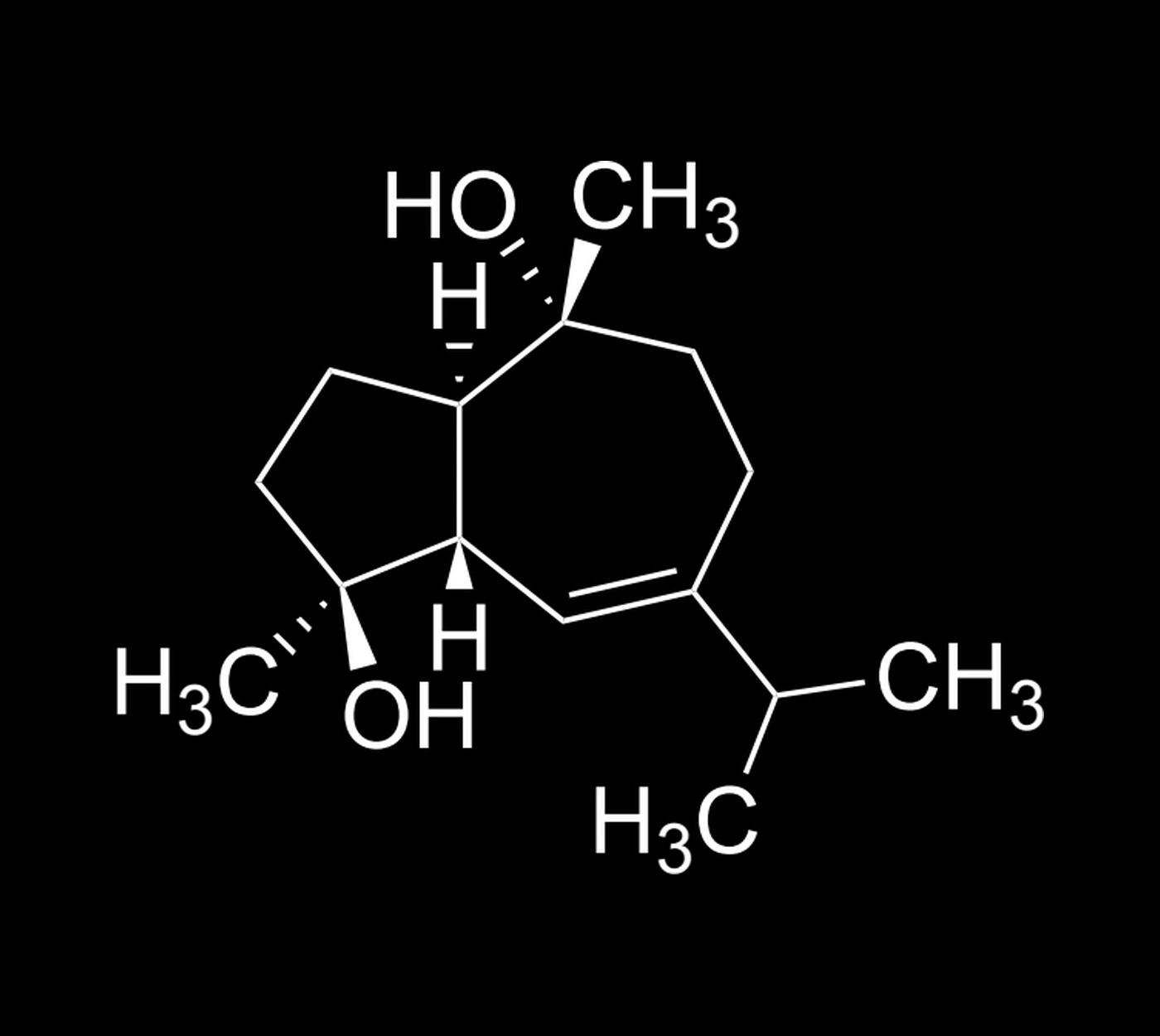
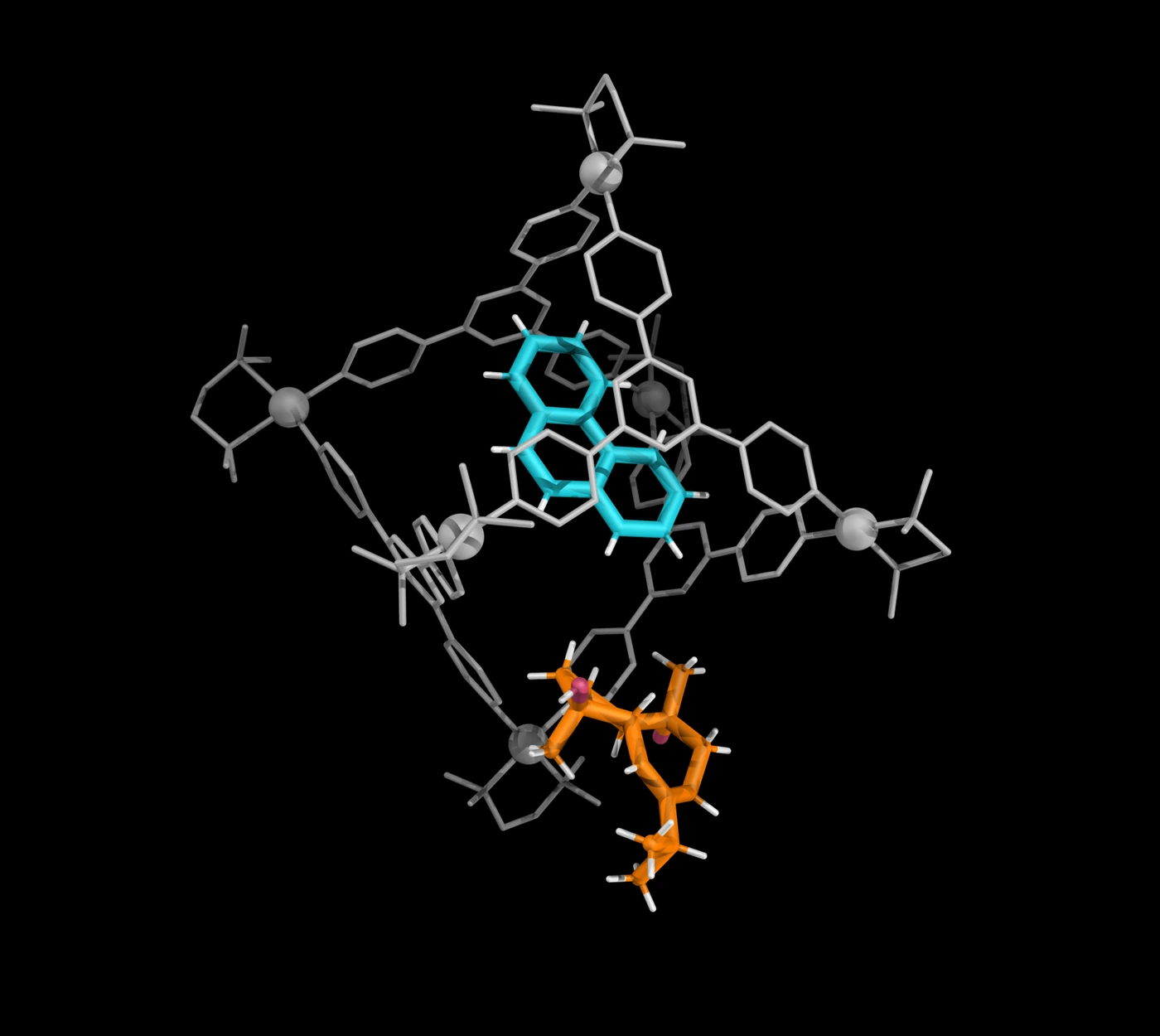
Alismoxide (compound 21) was structurally analyzed using cage 1a and phenanthrene (2a) in the size-compensation strategy for low-polarity small molecules.
G091 · Sesquiterpenoid
Alismoxide
C15H26O2 · 238.37 g mol−1
First crystal structure · Reported for the unmodified analyte in this study → · Read the story ↓
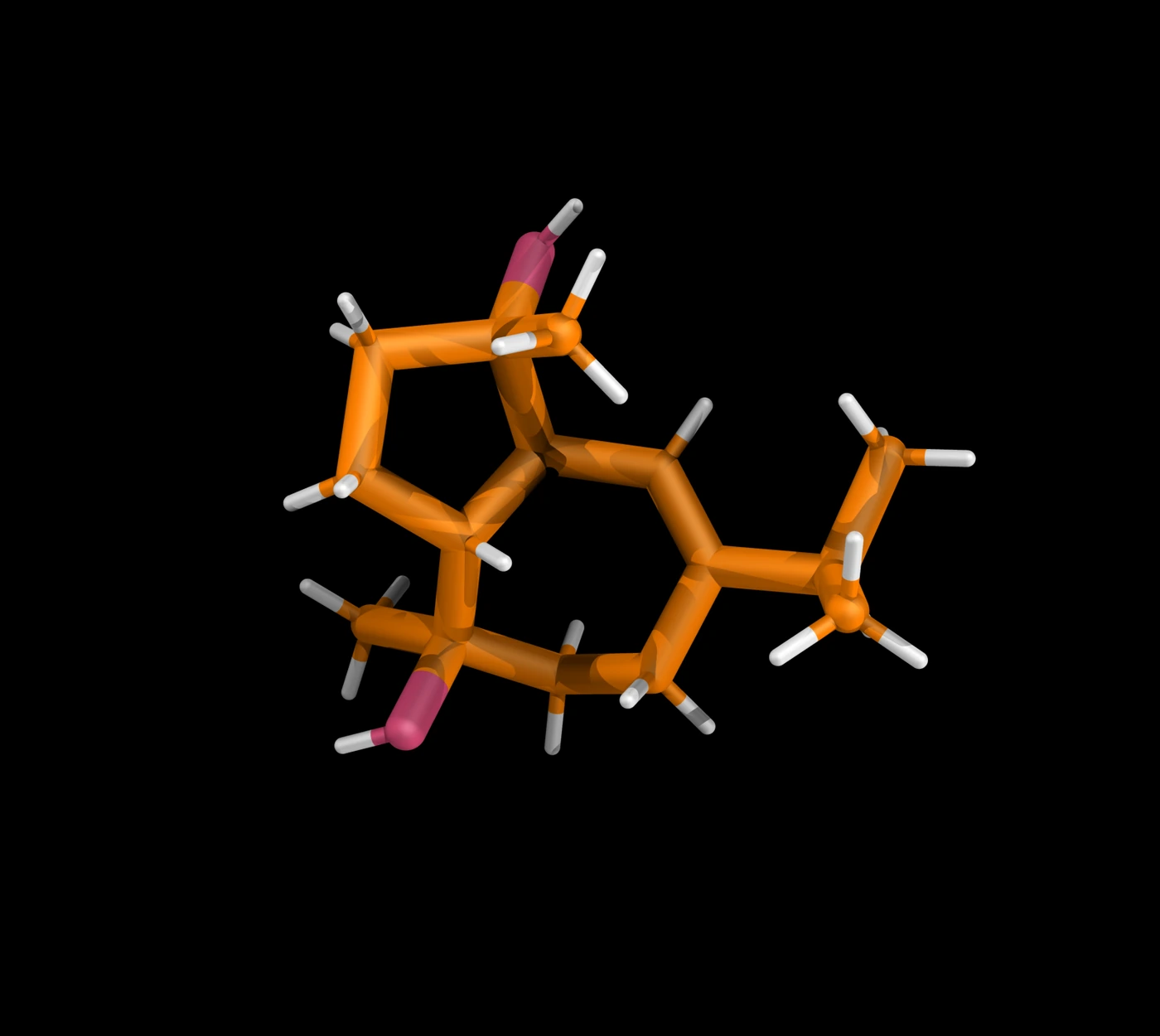
INTERACTIVE 3D STRUCTURE
Explore Alismoxide in its crystalline sponge
Drag to rotate, scroll to zoom, switch the cage on or off, and export the current view.
CHONCagePhenanthrene 2a
- Molecular formula
- C15H26O2
- Molecular weight
- 238.37 g mol−1
- CCDC accession
- 2565747 ↗
- Host
- Pd6L4 cage 1a
- Compound in publication
- 21
MOLECULAR HISTORY
From a revised structure to a crystal view of alismoxide
Alismoxide’s name outlived its first structural assignment. Isolated from Alisma rhizomes, it passed through a structural revision and a stereochemically informative total synthesis before the present work brought the unchanged molecule into a host–guest crystal.
- 1983
A new constituent of Alisma rhizomes
The original report introduced alismoxide and alismol as new sesquiterpenoids from takusha, the medicinal rhizomes of Alisma. Chemical transformations and physical measurements supplied the first structural proposals. This began the molecule’s documented history, although the alismoxide assignment would later change.1
- 1992
The structural assignment changes
While studying Chinese Alismatis Rhizoma, Yoshikawa and colleagues isolated alismoxide again alongside newly identified orientalols. Their chemical and physicochemical evidence led them to revise its structure. The familiar name therefore carried a corrected molecular model, showing why isolation and a secure structural assignment are distinct milestones.2
- 2006
Synthesis establishes stereochemistry
Blay and colleagues synthesized (+)-alismoxide and its 4-epimer, establishing the absolute stereochemistry of the positive enantiomer. Their work also reassigned a previously reported Silphium guaienediol as (−)-alismoxide. Deliberately constructing and comparing stereoisomers supplied evidence beyond the earlier isolation studies.3
- 2026
The unchanged molecule enters a crystal
In the published size-compensation study, alismoxide and phenanthrene occupy cage 1a together. The host–guest crystal provides a diffraction model of chemically unmodified alismoxide. The authors report this crystallographic characterization as the first for the parent analyte, adding a structural view to its earlier revision and synthesis.4
WHY THIS STRUCTURE MATTERS
Alismoxide’s history moved from an initial structural proposal to a corrected model and a stereochemically informative synthesis. The 2026 crystal structure adds direct diffraction evidence for the chemically unmodified molecule, bringing another form of experimental observation to that sequence.
References
- Oshima, Y.; Iwakawa, T.; Hikino, H. “Alismol and alismoxide, sesquiterpenoids of Alisma rhizomes.” Phytochemistry 1983, 22, 183–185. DOI 10.1016/S0031-9422(00)80084-9 ↗
- Yoshikawa, M.; Hatakeyama, S.; Tanaka, N.; Fukuda, Y.; Murakami, N.; Yamahara, J. “Orientalols A, B, and C, sesquiterpene constituents from Chinese Alismatis Rhizoma, and revised structures of alismol and alismoxide.” Chemical and Pharmaceutical Bulletin 1992, 40, 2582–2584. DOI 10.1248/cpb.40.2582 ↗
- Blay, G.; García, B.; Molina, E.; Pedro, J. R. “Syntheses of (+)-alismoxide and (+)-4-epi-alismoxide.” Journal of Organic Chemistry 2006, 71, 7866–7869. DOI 10.1021/jo061278y ↗
- W. He; L. Soliman; H. Takezawa; M. Fujita. “Expanding the Chemical Space of Analytes in the 2G Crystalline Sponge Method: Size-Compensation Strategy for the Structural Analysis of Low-Polarity Small Molecules.” Angew. Chem. Int. Ed. 2026, e4748505. DOI 10.1002/anie.4748505 ↗
Crystal records in this study
| Host | Modulator | CCDC | SI table |
|---|---|---|---|
| Standard cage 1a | Phenanthrene 2a | 2565747 | S18 |
SOURCE PUBLICATION
Expanding the Chemical Space of Analytes in the 2G Crystalline Sponge Method: Size-Compensation Strategy for the Structural Analysis of Low-Polarity Small Molecules
W. He, L. Soliman, H. Takezawa, M. Fujita
Angew. Chem. Int. Ed. 2026, e4748505.
First published: 20 October 2026 · Early View
DOI 10.1002/anie.4748505 ↗