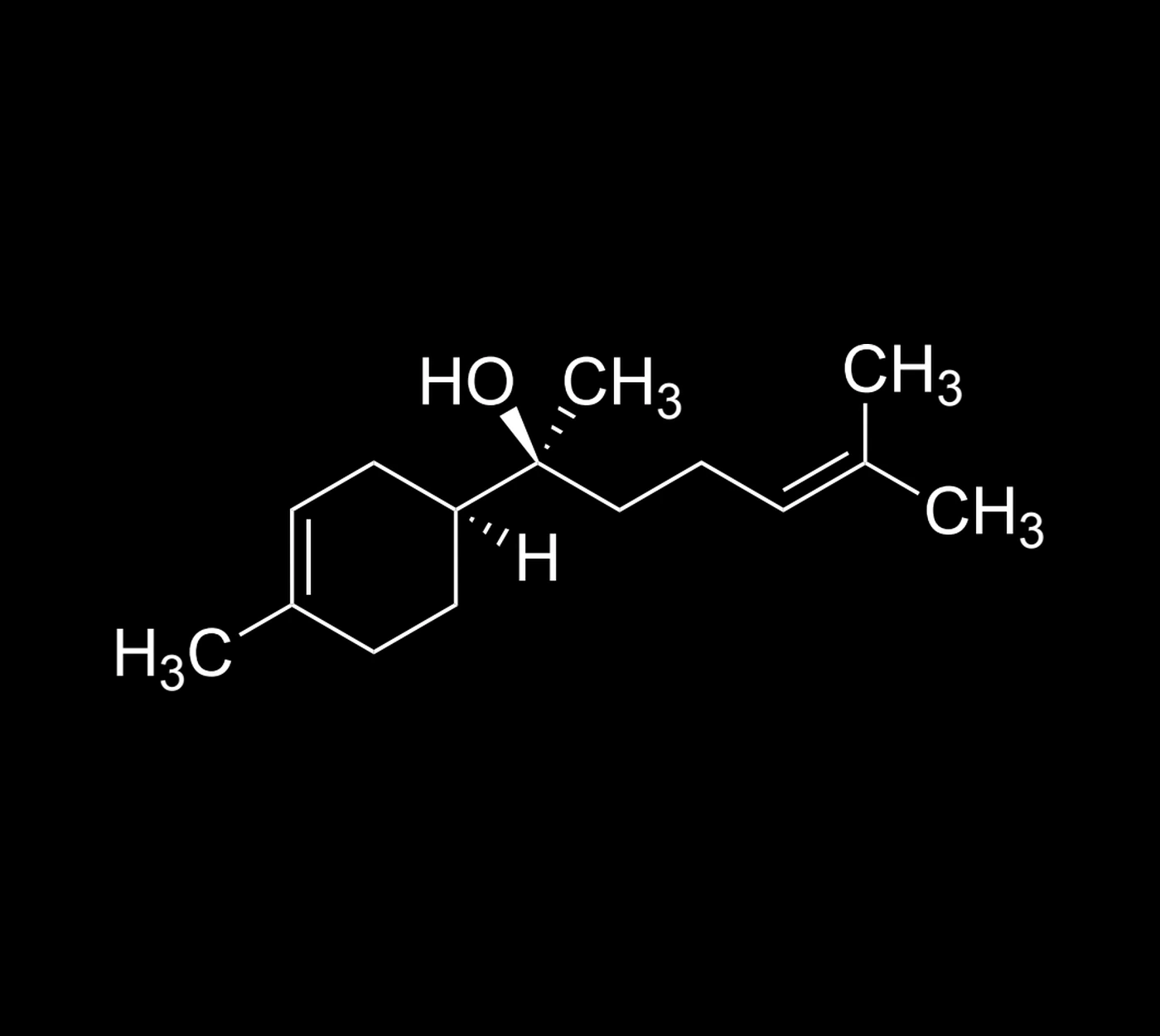
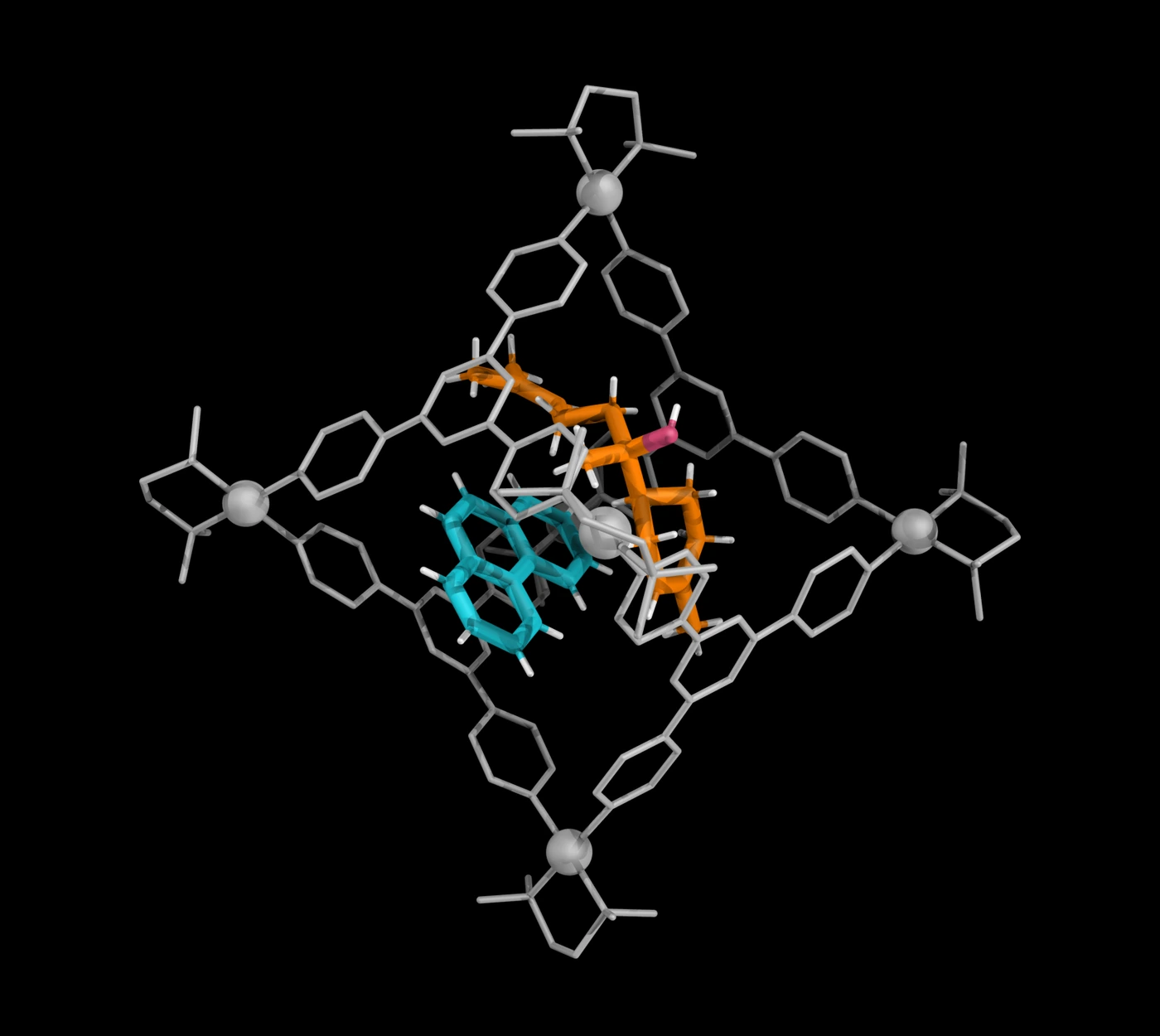
(−)-α-Bisabolol (compound 24) was structurally analyzed using cage 1a and phenanthrene (2a) in the size-compensation strategy for low-polarity small molecules.
G094 · Sesquiterpenoid
(−)-α-Bisabolol
C15H26O · 222.37 g mol−1
First crystal structure · Reported for the unmodified analyte in this study → · Read the story ↓
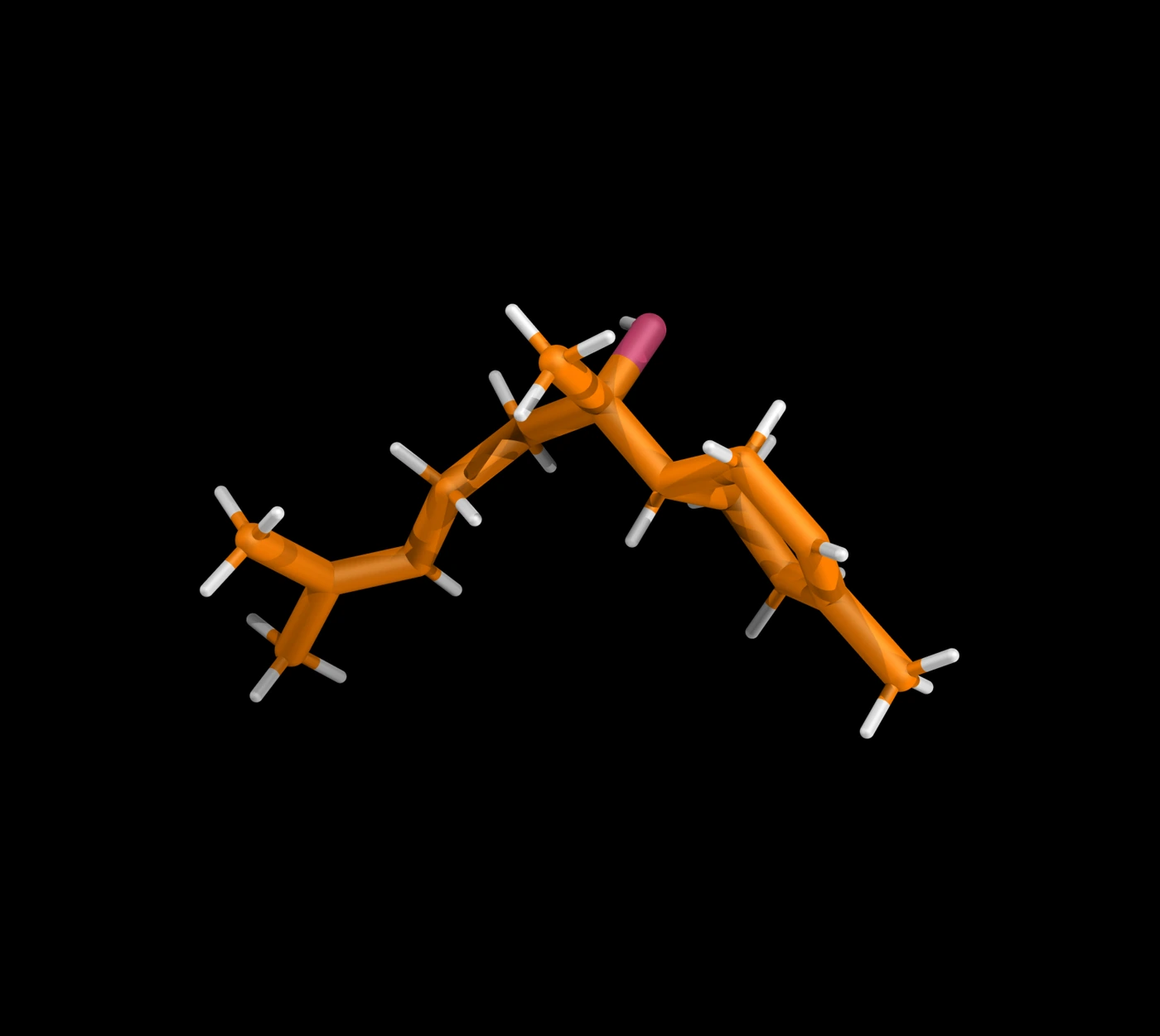
INTERACTIVE 3D STRUCTURE
Explore (−)-α-Bisabolol in its crystalline sponge
Drag to rotate, scroll to zoom, switch the cage on or off, and export the current view.
CHONCagePhenanthrene 2a
- Molecular formula
- C15H26O
- Molecular weight
- 222.37 g mol−1
- CCDC accession
- 2565743 ↗
- Host
- Pd6L4 cage 1a
- Compound in publication
- 24
MOLECULAR HISTORY
From derivative crystals to the unmodified alcohol
An early crystallographic comparison of (−)-α-bisabolol examined a urethane made from the natural alcohol. Stereoselective synthesis later opened routes to its four stereoisomers. The present work brings the unchanged alcohol itself into a crystal suitable for structural analysis.
- 1989
A crystalline derivative resolves a comparison
Carman, Robinson and Sutherland compared p-phenylazophenylurethane derivatives of (−)-α-bisabolol from Vanillosmopsis and Matricaria. Their matching unit cells and diffraction patterns supported identity despite differing melting points and optical rotations. The crystallographic evidence concerned the urethane derivative, rather than the unmodified alcohol displayed here.1
- 1993
All four stereoisomers become accessible
Chen, Archelas and Furstoss reported preparative stereoselective microbial epoxide hydrolyses that provided access to all four bisabolol stereoisomers. This synthetic work addressed distinctions hidden behind the common bisabolol name: the same connectivity can describe molecules with different configurations at their stereogenic centers.2
- 2026
The parent alcohol is examined directly
In the published study, (−)-α-bisabolol is paired with phenanthrene inside cage 1a and analyzed without conversion into a urethane. The authors report the first crystal structure of the chemically unmodified parent analyte. It supplies a molecular view distinct from the earlier derivative structures.3
WHY THIS STRUCTURE MATTERS
This structure bridges a specific historical gap: earlier diffraction evidence came from a chemically modified urethane, whereas the present host–guest crystal contains the parent alcohol. It supplements established stereochemistry with crystallographic observation of the unchanged analyte.
References
- Carman, R. M.; Robinson, W. T.; Sutherland, M. D. “The Crystal Structure of Vanillosmopsis-Derived (−)-α-Bisabolol p-Phenylazophenylurethane.” Australian Journal of Chemistry 1989, 42, 2041–2042. DOI 10.1071/CH9892041 ↗
- Chen, X.-J.; Archelas, A.; Furstoss, R. “Microbiological transformations. 27. The first examples for preparative-scale enantioselective or diastereoselective epoxide hydrolyses using microorganisms. An unequivocal access to all four bisabolol stereoisomers.” Journal of Organic Chemistry 1993, 58, 5528–5532. DOI 10.1021/jo00072a043 ↗
- W. He; L. Soliman; H. Takezawa; M. Fujita. “Expanding the Chemical Space of Analytes in the 2G Crystalline Sponge Method: Size-Compensation Strategy for the Structural Analysis of Low-Polarity Small Molecules.” Angew. Chem. Int. Ed. 2026, e4748505. DOI 10.1002/anie.4748505 ↗
Crystal records in this study
| Host | Modulator | CCDC | SI table |
|---|---|---|---|
| Standard cage 1a | Phenanthrene 2a | 2565743 | S21 |
SOURCE PUBLICATION
Expanding the Chemical Space of Analytes in the 2G Crystalline Sponge Method: Size-Compensation Strategy for the Structural Analysis of Low-Polarity Small Molecules
W. He, L. Soliman, H. Takezawa, M. Fujita
Angew. Chem. Int. Ed. 2026, e4748505.
First published: 20 October 2026 · Early View
DOI 10.1002/anie.4748505 ↗